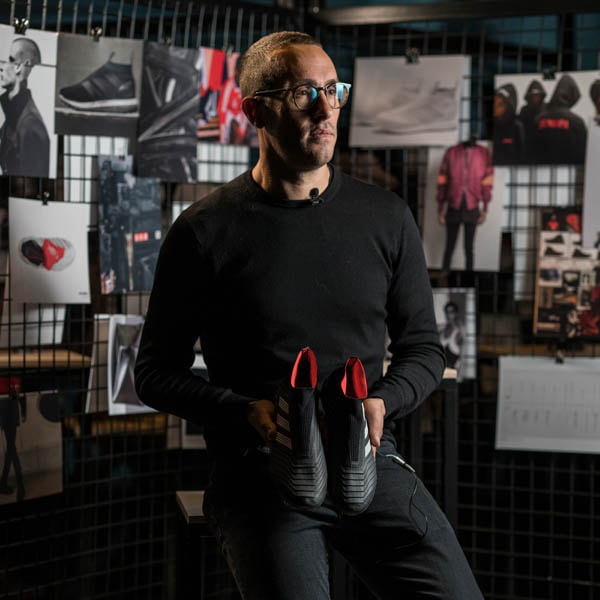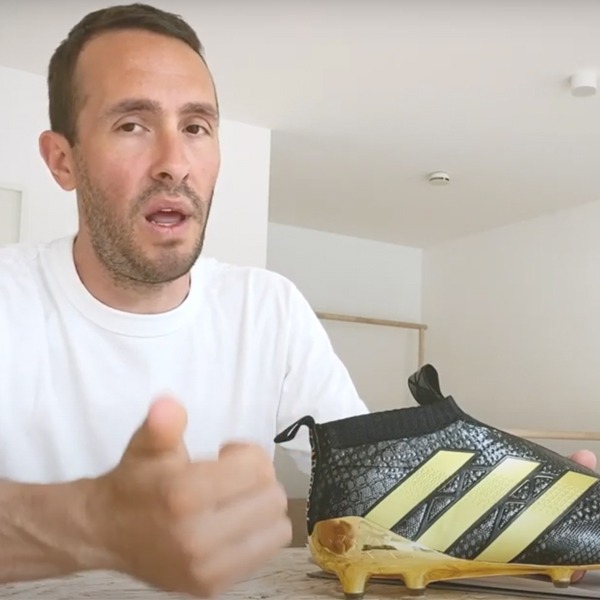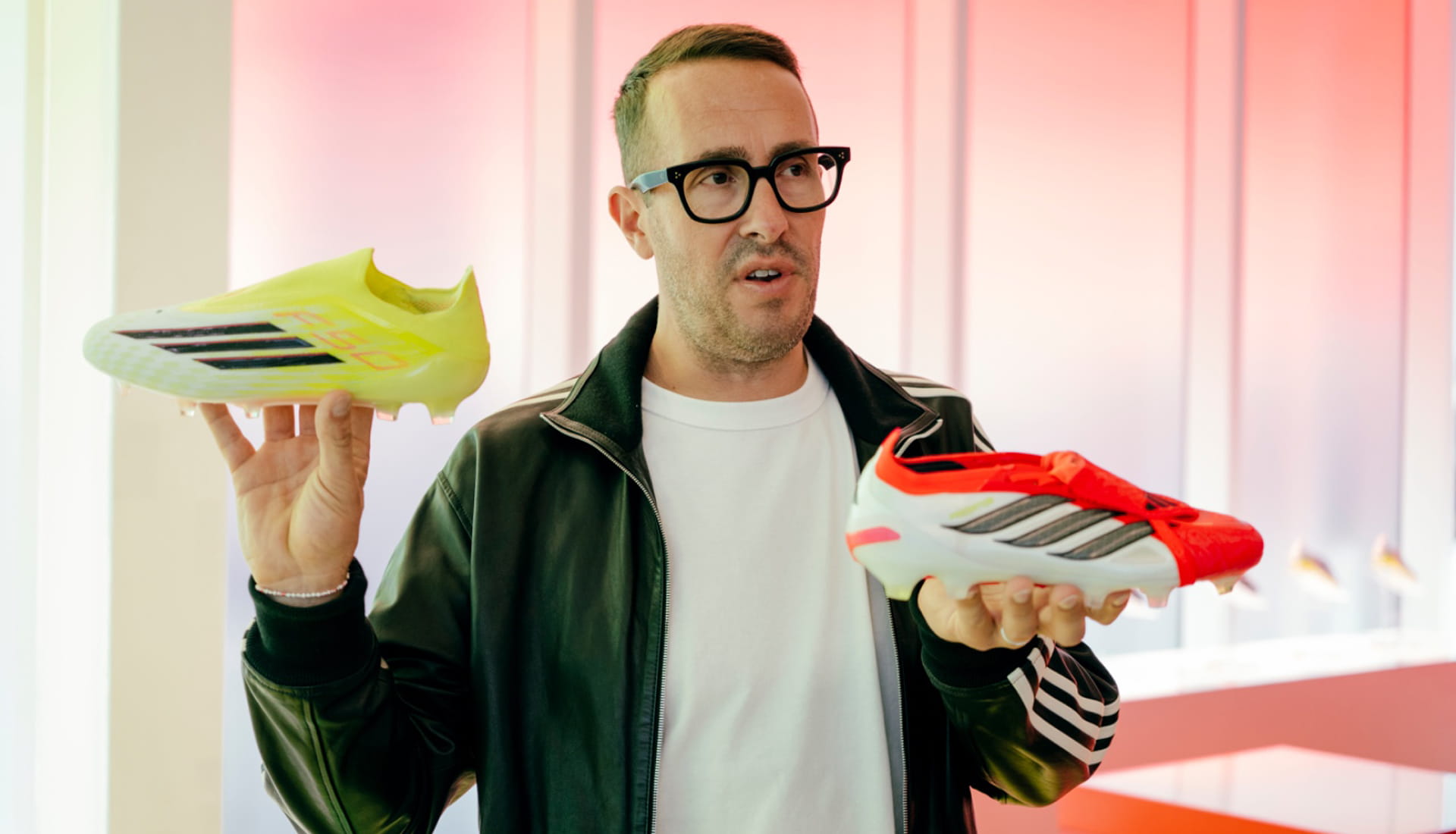
Most kids grow up dreaming of influencing the game from on the pitch, being the next Messi. Not many will grow up dreaming of shaping it from off the pitch. In fact, few probably even spare that side of the game a passing thought. But for Sam Handy, General Manager of Football at adidas, that’s his 24/7.
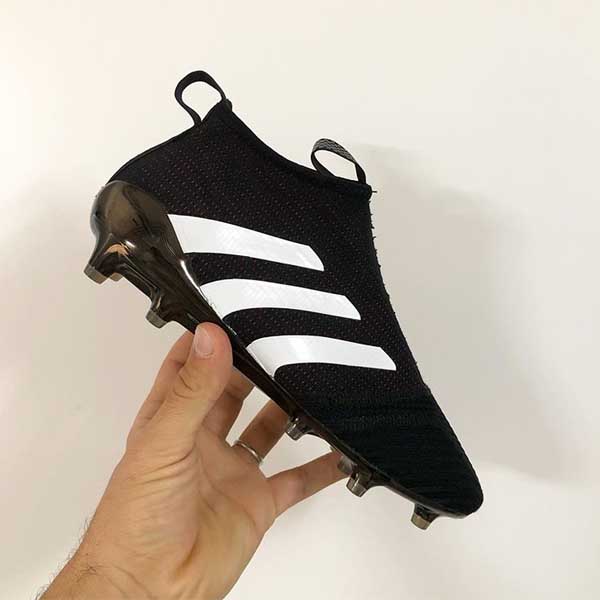
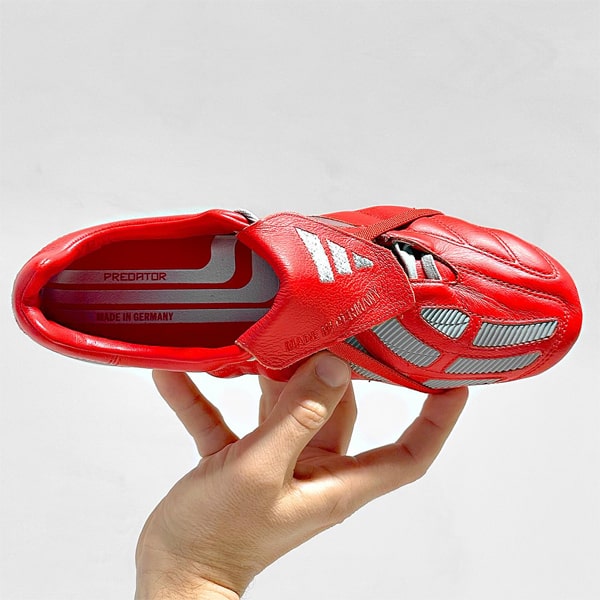
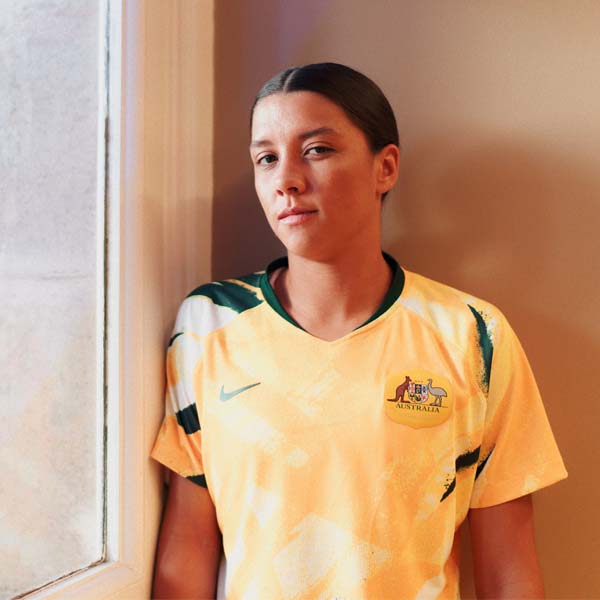
If you have even a passing interest in what adidas have been doing in football of late, from the return of the foldover tongue on the Predator or the resurrection of the F50 to arguably some of the best kit designs in the game (and maybe of all time), then chances are you’ve already heard the name Sam Handy before. Over the last decade, Handy has steadily risen through the ranks at adidas, shaping the visual and performance language of the modern game from behind the scenes. Now, as General Manager of Football, he sits at the very centre of it all, overseeing everything from the boots on players’ feet to the broader cultural direction the brand takes within the sport.

But Handy’s influence goes far beyond product. In an era where football increasingly exists at the intersection of sport, style, and storytelling, his perspective reflects a deeper understanding of the game as a cultural force. From World Cup cycles plotted years in advance to the subtleties of how a kit or silhouette resonates with fans worldwide, his role operates on a scale most supporters rarely see.
We recently had the chance to sit down with Handy and took the opportunity to talk origins, aesthetics, creative risk, and what it really means to shape the future of football, on and off the pitch.
First up, Sam, how did football first come into your life?
People always ask, “What’s your first football memory?” Heading into a World Cup, for me it was Italia ’90. I was about ten at the time.
Growing up, were you more obsessed with the game itself or everything around it – boots, kits, players’ attitudes?
For me, football was always as much about the visual side as the sport itself. I always wanted to work in product, so I was drawn to the visual language: the look of the kits, the boots, the iconography of the players – alongside the football, of course. The look and feel had equal weight for me, which probably makes sense given where I ended up working.
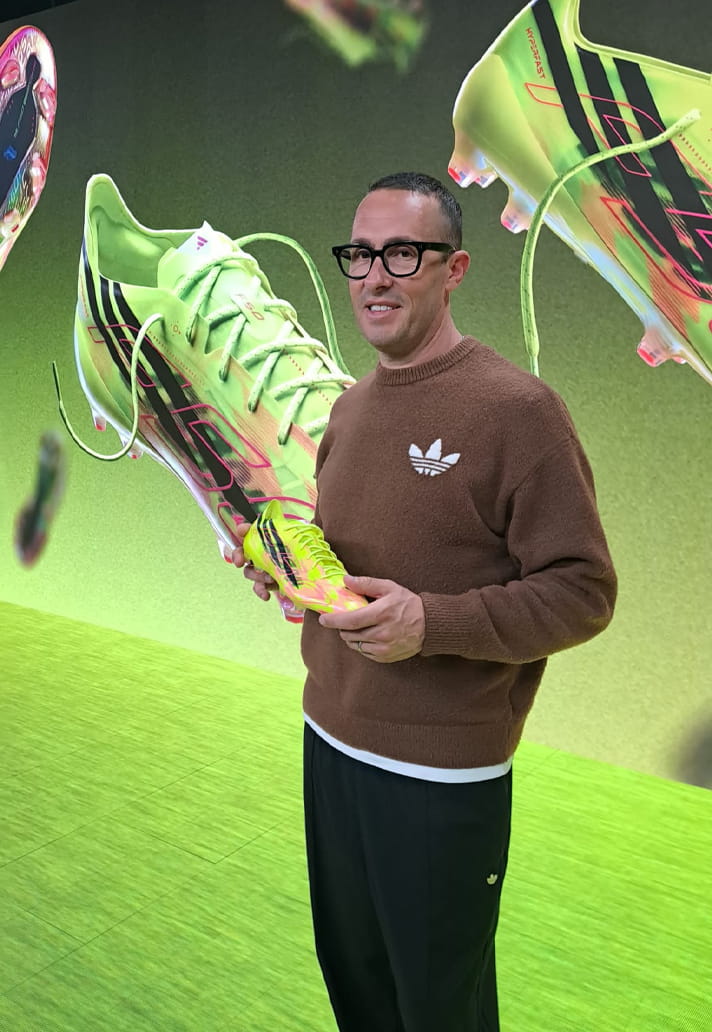
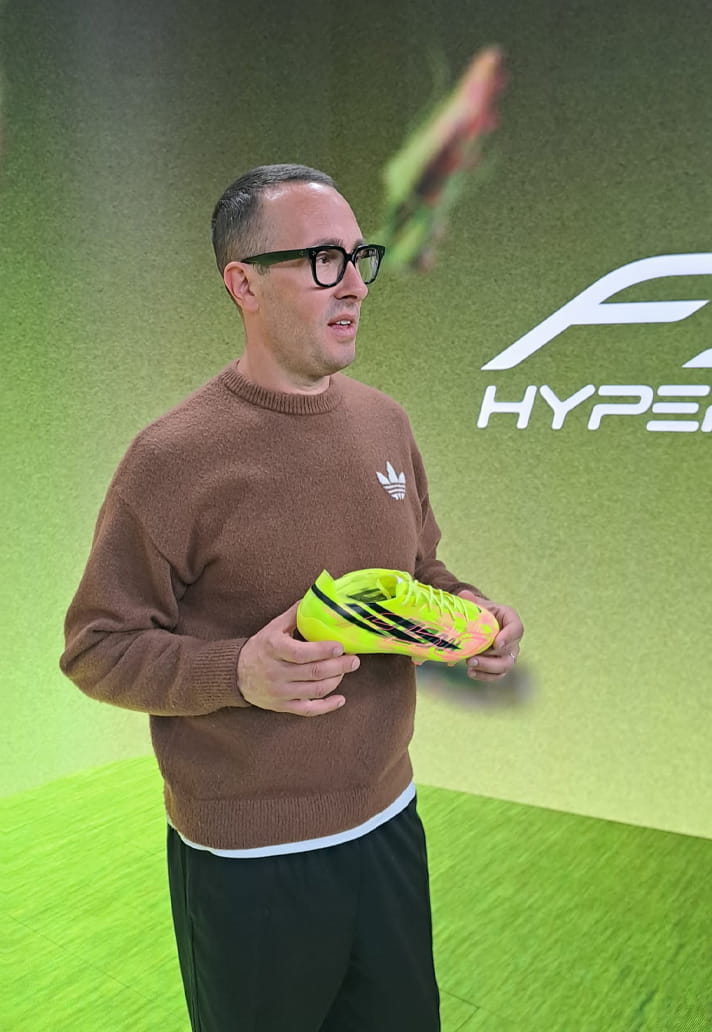
How has your personal relationship with the game changed now that you help shape how it looks, feels, and moves globally?
A few things change once you start looking at football from the creation end. First, it’s very hard to hold on to your own personal club, or even federation, affiliations. That disappears quite quickly, because you’re focused on the projects you’re working on, the contracts, the partnerships. A club I wouldn’t have supported 15 years ago, now I’m ecstatic to see them playing well in a great kit, with the kits selling and people falling in love with them.
The other big change is the time frame. You stop thinking in terms of “this season” and start thinking in multi-seasons and contract frames. When we sign a new player, we think about how that relationship will develop over the course of their career. We spend a lot of time now thinking about World Cup 2030, World Cup 2034. There’s an oddity in working in football on the brand side: you’re forced to think beyond your own career time frame. You sign partners in windows where, personally, I might want to be retired somewhere with a glass of wine. You’re always trying to set the category up for the next generation. That’s very different from looking at it as a fan, where you just care about the score this weekend.
Do you still experience football as a fan, or is that impossible now?
Yes, of course. When you turn on the TV or go to a match, you immediately experience it as a fan. But once it’s over, you’re looking at the results and thinking about upcoming product drops and what it all means. Then you’re back into the business – the product, the look, the marketing. For me, look, feel, business, marketing, they’re all one thing. But you can absolutely still enjoy it. I’m really looking forward to the World Cup kick-off. I’m going to the opening match, I can’t wait. I’m somewhat indifferent to the result; I’m just excited to be in the stadium for that game.
So you don’t have any allegiance – like England – for the World Cup?
It’s difficult. I’m probably less conflicted than a lot of people on the team. Some will be like “I’m an England fan regardless of whether they’re an adidas team”. But when we kicked off our World Cup concepts internally, one thing I shared was: when football wins, adidas wins. For me, there isn’t really a bad outcome to that World Cup. There are lots of good ones. There are federations we don’t have under contract, but we have incredible players with them who we’d love to see win the World Cup. So whatever happens on that final day, seeing that World Cup in North America this summer is a win for the sport, which is good for me and good for adidas. That said, if England win, I’m not going to be annoyed. I just find a win in other things as well.
SoccerBible coined the term Creative Soccer Culture, but what do you think of when I say that term to you?
I feel like I’ve watched SoccerBible and football culture grow together at the same time. It’s beyond the game now; it’s about aesthetics, stories, and culture.
I think football is the sport with the deepest culture. It’s one of the oldest sports and the most global. From the most niche corners to the biggest stages, football is a culture. One thing that feels old-fashioned now is the idea of “sport and culture,” as if they’re separate. Sport is culture. If culture is music, for example, how is that any different?
Where do you personally look for inspiration outside of football – music, fashion, art – that feeds back into your work?
I grew up as a designer, went to art school, of course. You see how fashion influences football and how football influences fashion. Players, music, the soundtrack, what’s in your headphones on the way into a game – those worlds all blur together. For me, football is a cultural force in its own right, with a lot of influences acting on it and influences it’s putting back into the world.
A great example: you can get in a taxi anywhere in the world and have a fluent conversation about football before you reach your destination, even if the driver doesn’t speak your language well. If they’re a football fan at all, you’ll definitely be able to talk. There aren’t many things that can do that. No other sports really can. Maybe politics does, but you might get kicked out of the taxi.
What does “being creative” actually mean inside adidas today – is it freedom, risk, or restraint?
It’s definitely not restraint. You can see we’re very unrestrained in what we’re doing at the moment. A lot of it is about not being scared to do things we might previously have been scared to do, and thinking harder about how what we create interacts with fans, the consumers of football culture.
Take bringing back the trefoil. That was always a sacred line: never blend those two worlds. We started doing it in 2024 when we put it on away and third kits for clubs. Now you’re seeing the next stage of that in the World Cup. That’s a very consumer-focused approach to risk. Yes, it could be risky, it’s a logo we want to protect, we don’t want to over-distribute it. But we also know people love it, and it unlocks our ability to make some really beautiful products.
Another creative philosophy we’ve adopted is that we’re only competing with ourselves. We’re competing with adidas from 10, 15, 20 years ago; with what we did last year or last week. We’re just continually trying to move football forward, not getting too caught up in our commercial competitors. We don’t talk much about other brands; we talk about how we can be better than what we just did.
When launching a new boot or kit, what comes first: performance data or emotional storytelling?
Performance always comes first. Every time we update a boot, it’s based on all the feedback from the previous one. The starting point is always talking to players – what they liked, what they didn’t like, what could be improved. That raw data from the interaction with pro players is always the starting point.
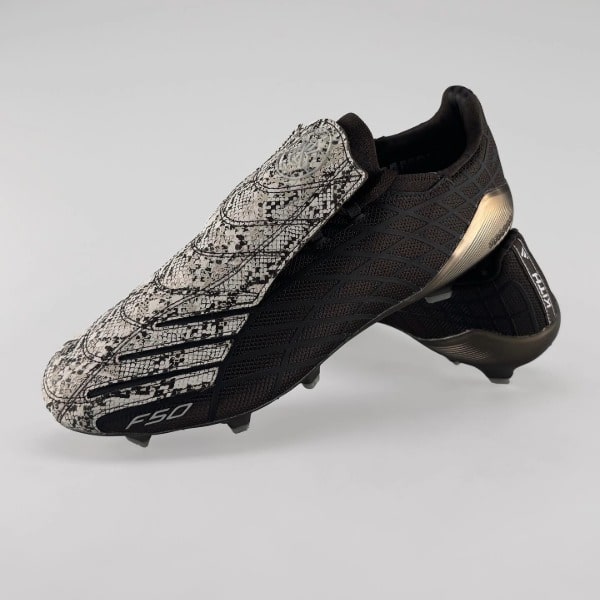
That’s why our cycles are roughly two to three years. I’ve come to this meeting straight from looking at the prototypes for the F50 for 2028. We’re already working on 2028 materials, tooling, construction, upper updates, to make a better version of this one, with another update coming in between. We’re always trying to move it on, but the 2028 updates are based on all the familiarisation feedback on the 2026 boot.
I was going to say, the players have only just started wearing this one – certainly on pitch at least.
Yes, but they’ve been familiarising themselves with it in the background for a while. We also have a lot of testing feedback. This is the first time we’ve seen a familiarisation boot taken out onto the pitch and scoring goals as well. Cherki has been wearing it, Ekitike was wearing it, Díaz scored in it. Seeing familiarisation boots go from the training ground straight into competition is new.
Usually, it’s daunting to update a good boot for a World Cup. The current F50 is really good; players love it. We’ve had our highest-ever share of F50s on pitch. I believe it’s the top goal-scoring boot in Europe right now, so it’s working. Getting players out of something that’s working and into something new is usually quite tricky. In this instance, we’ve had to keep that colorway away from people because if it gets too close, it’ll pop everywhere. It’s hard to hide. It would've been everywhere already.
How do you balance modern tech with football’s obsession with nostalgia and heritage?
The big unlock for us, to stop those themes from clashing, has been the number of bring-backs we do now, and how seriously we take authenticity. Previously, you might try to do both things – new tech and nostalgia – in one product. For example, a Predator that looks like a new Pred but with lots of cues from an old one.
Now we’ve moved it on. At the same time as you can buy the new F50 Hyperfast, we’ve also done bring-backs of the Messi Tunit and the adizero F50. We’ll keep doing those. So if you’re a player who wants to play in an archive boot because you love those stories, you can. But we’re also writing a new chapter of the archive with Hyperfast Evo.
For me, it’s less about archive cues and more about key franchise cues. The F50 branding is very iconic, and it’s there for a reason: continuity and legacy. But the rest of the package is brand new, high-performance, 130 grams of it.
Do modern players understand their influence on culture more than previous generations?
Yes, I believe so. Largely because of how they live on social now, how they engage with their audiences and become their own platforms. If you look back at a lot of footballers in the early days of social media, their first tweets feel quite amateur, like my first tweets. Now you see the power of the player as a brand. There’s a lot more self-reflection about what their content means and what it does for their personal brand.
And it’s fun. Someone like Nick Woltemade, for example, with his Finsta, he’s somewhat of a style icon. He definitely influences how I shop.
How do you think football culture will look five or ten years from now?
The idea of football culture isn’t new to us, but it probably took longer than many of us anticipated to become as big as it is now. This World Cup in North America is going to have a huge influence on the growth of the cultural side of the game. Football will become more like basketball has been for a long time, but at a completely different scale, because football’s scale is something no other sport has.
I think we’re firmly anchoring football as a culture, and it’s only going to get bigger and more relevant. The growth of the women’s game is a huge part of that. It’s still massively under-indexed versus its potential. A lot of those players are becoming icons for a generation of girls and boys, alongside all the male players, the next generation, and the legacy names. It’s not getting smaller.
Finally, finish this sentence: Football, to me, is…
Twenty-four hours of my day.
Shop adidas football boots at prodirectsport.com/soccer