Athens has a vibe right now. My Instagram feed is full of cool designers, artists, wine bars and generally good things coming out of the Greek capital.
So the fact that Kallithea, one of the city’s most vibrant and promising districts, is home to a football club producing some of the slickest kits in the game should not come as much of a surprise. Neither should the fact that Ted Philipakos is behind it all.
For those not au fait with Philipakos, he is the New York-born Greek-American brand and creative director who served as CEO and CBO at Venezia FC during the club’s rise from Serie D to Serie A.
Since turning his attention to Athens Kallithea, he has helped transform the club into one of football’s most recognisably stylish outfits.
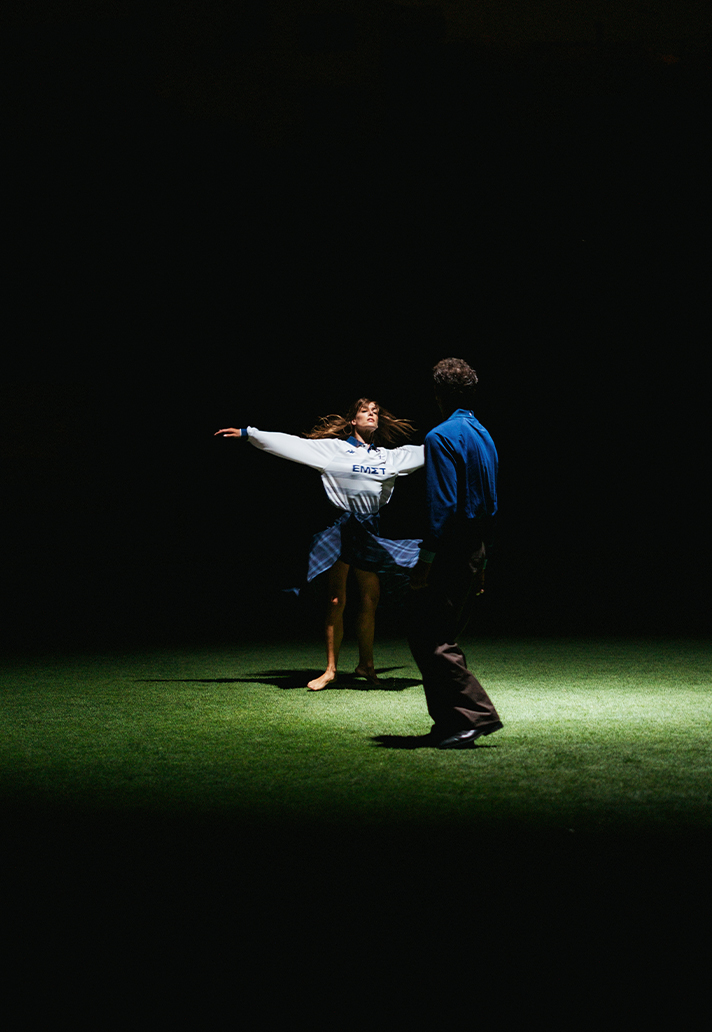
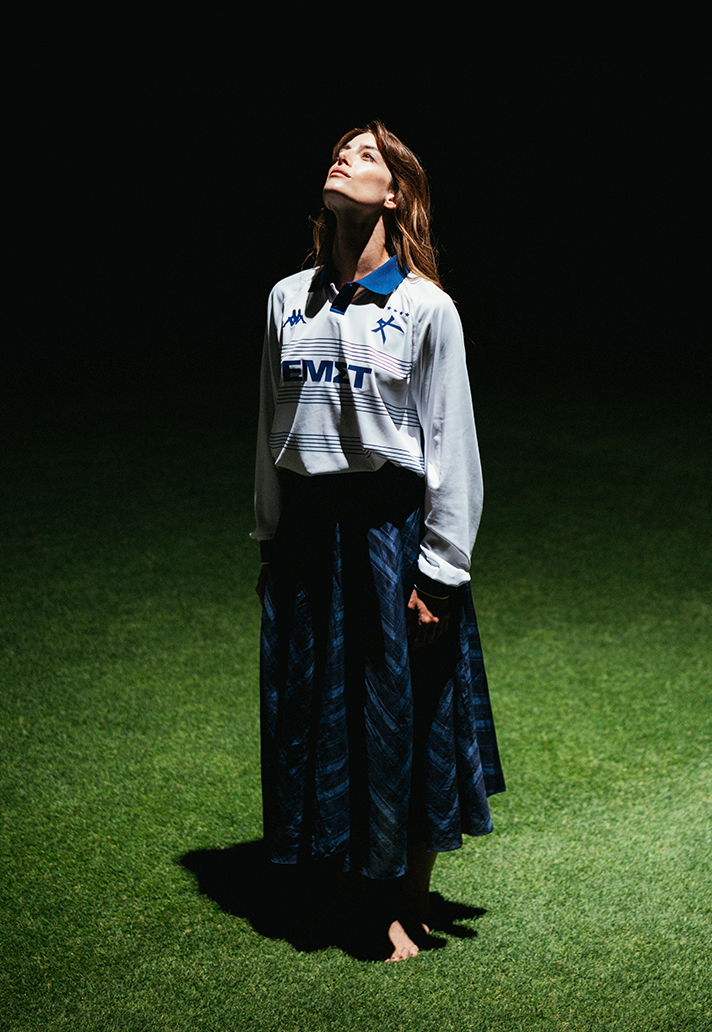
Now, following a season in which it decided not to release anything new, AKFC is back with its shirts for 2026/27 designed in partnership with Kappa and Munich-based design studio Bureau Borsche. And, because this is Athens Kallithea, they have arrived via a 16mm dance film soundtracked by a 1963 Greek ballad.
The decision to sit out the annual kit cycle was unusual. Football clubs, after all, are not generally known for turning down the chance to sell you another shirt. Athens Kallithea instead extended the life of its 2024/26 collection, pointing to the “gross overproduction” of the industry and its ambition to create “enduring pieces”.
It sounds like the sort of deliberate anti-growth strategy that could occupy several slides of a very serious brand presentation. Philipakos is less dramatic about it. “It really didn’t change anything,” he says. “We’re just going with the flow as usual.”
That flow appears to be working. The previous collection was shipped to supporters in 62 countries across six continents, repeatedly selling out along the way. Rather than being punished for releasing less, Athens Kallithea found that people were prepared to wait.
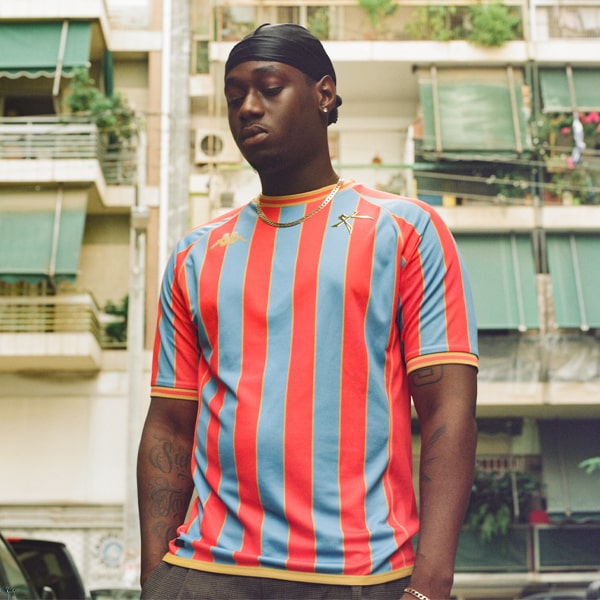
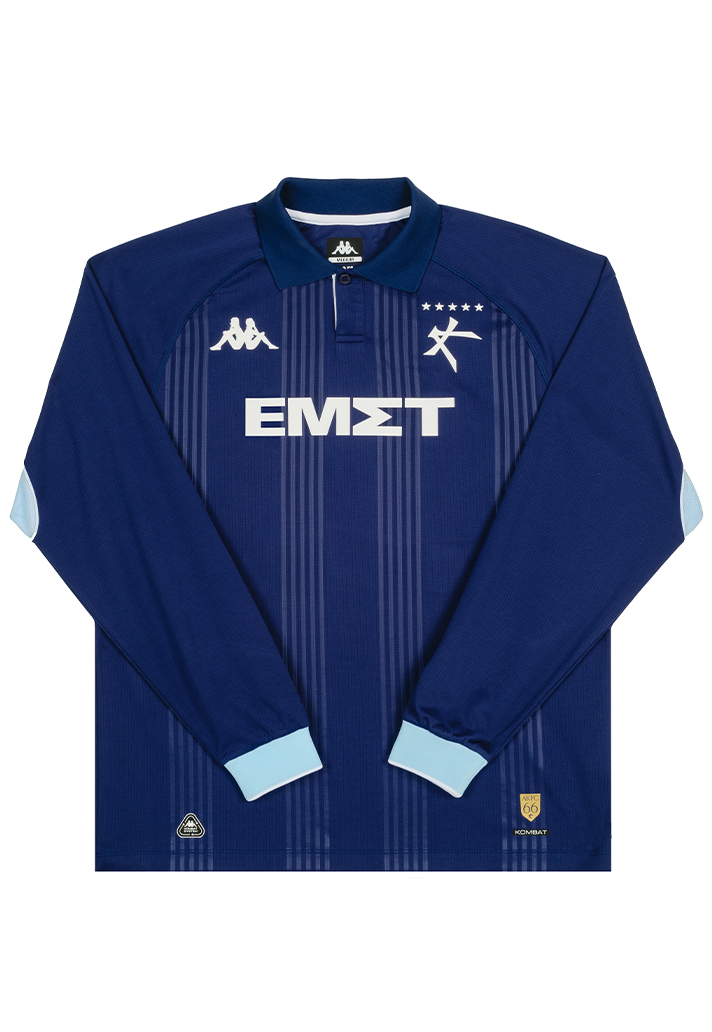
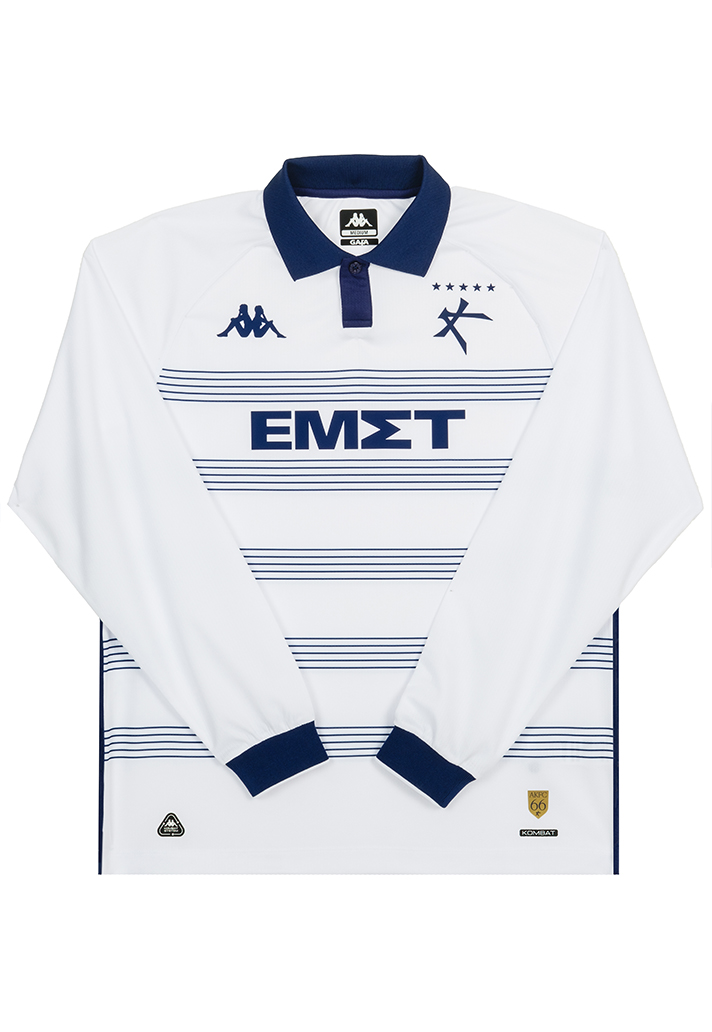
The new shirts arrive as the club celebrates its 60th anniversary. Founded in 1966 through the merger of five grassroots teams, AKFC has marked that history with five stars above its “AK” monogram crest. The number continues throughout the designs, although you might need to look closely to find it.
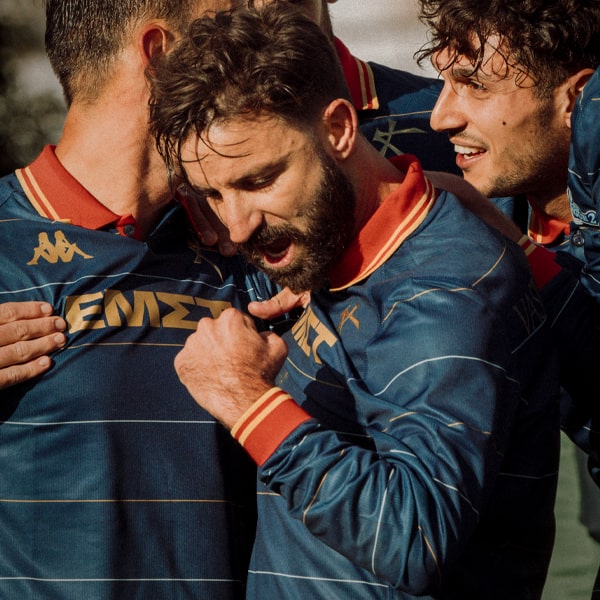
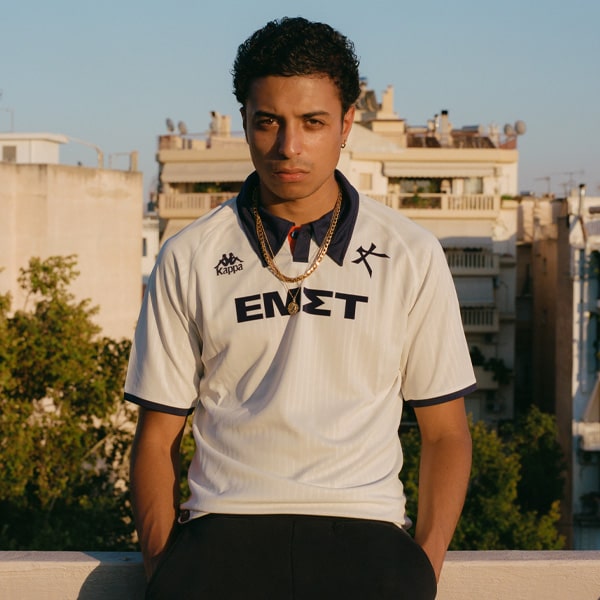
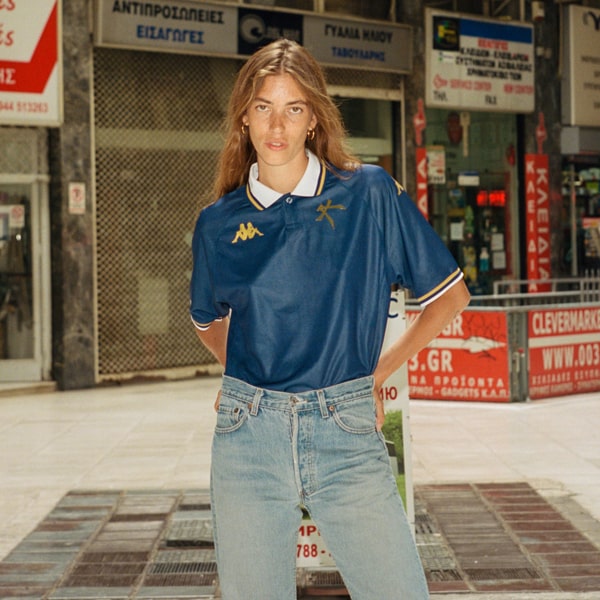
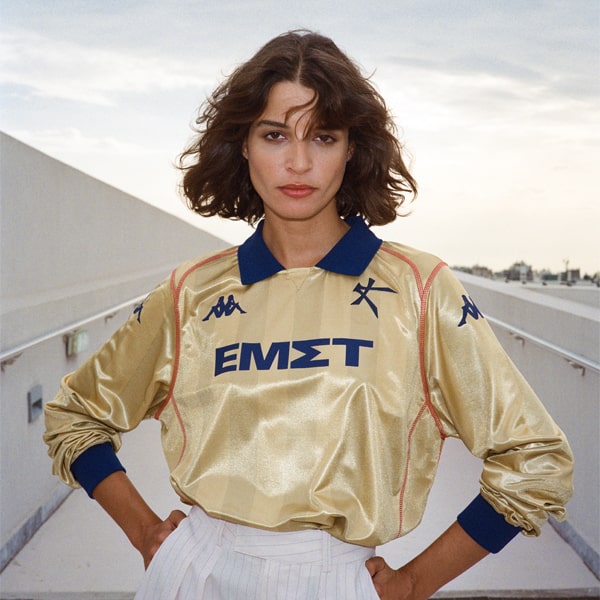
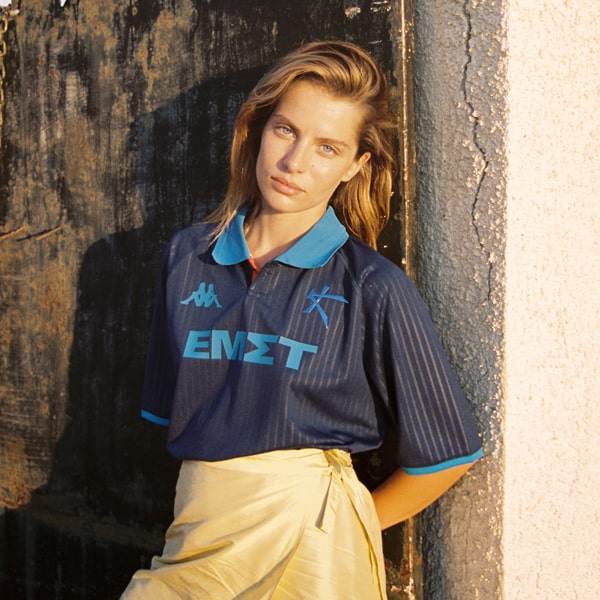
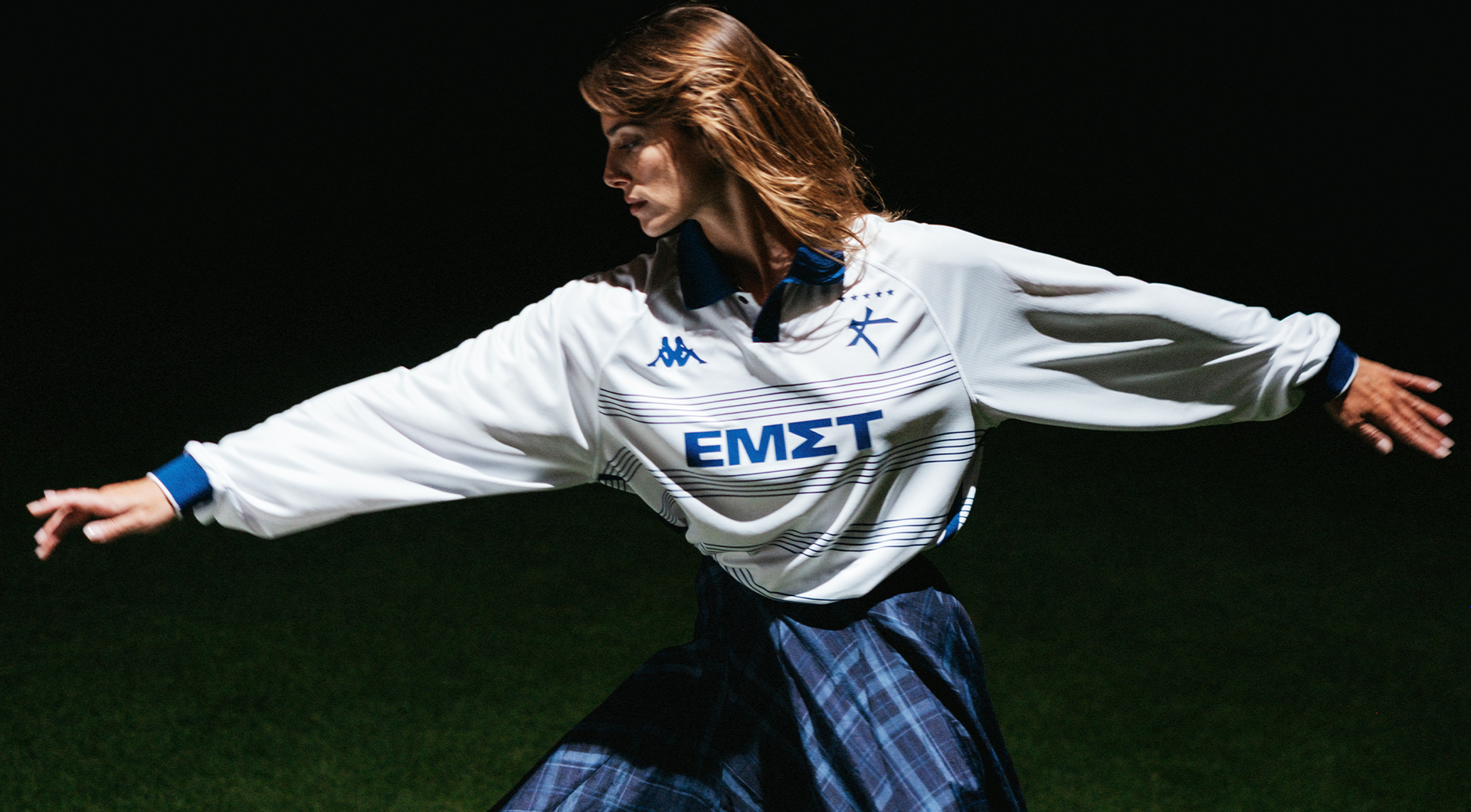
The deep-blue home shirt features debossed vertical lines arranged in sets of five, finished with white details and a light-blue panel beneath the arms. The white away shirt has a breezier feel, adding a blue collar and horizontal stripes arranged into five sets of five. Both are traditionally collared and available with long or short sleeves.
“In terms of aesthetics, we tend to be understated by nature. We’ve added the symbolic five stars above the crest, and it felt subtle yet significant, which is the right balance,” said Philipakos.
The kits are only one part of the anniversary. The club is also working on a historical research project involving its local community, meaning the shirts have been spared the usual commemorative burden of incorporating every available date, trophy and archival reference.
“It’s not like the kits had to do the heavy lifting,” Philipakos says. They do, however, carry the ΕΜΣΤ wordmark of the National Museum of Contemporary Art Athens.
The partnership is now entering its fourth year and remains one of the more unusual arrangements in European football: a cultural institution occupying the most commercially valuable piece of space on a football shirt.
It also avoids what Philipakos describes as the regular occurrence of “the sponsor killing the shirt”. Most clubs accept that risk because sponsors pay rather more money than museums tend to. Athens Kallithea believes the cultural value of the partnership can create commercial opportunities of its own.

A major international brand recently approached the club partly because it liked the idea of appearing alongside ΕΜΣΤ. The museum may not pay to be on the shirt, but its presence has helped make the entire proposition more attractive.
More importantly, Philipakos says, it has opened the club to people who would not usually venture inside football’s traditionally insular world.
“The partnership with ΕΜΣΤ has helped break stereotypes or preconceived notions about a football club,” he says. “It has helped facilitate open-mindedness about our mission and our environment, and it has connected us to new people beyond football’s traditional boundaries.”
In some cases, those people have become new football fans. In others, the club has simply directed a fresh audience towards the museum. Both outcomes feel more useful than another betting company appearing beneath the collar.
The relationship is part of a wider idea of what Athens Kallithea can be: not just a team representing part of the city, but a route into the neighbourhood and the culture around it.
That becomes particularly relevant when discussing those supporters in 62 countries. The further the shirts travel, the greater the temptation might be to soften the club’s identity into something broadly international. Philipakos believes doing so would miss the point entirely.
“When you enter our universe, and you take something tangible like a shirt from that universe, you’re getting a taste of our slice of Athens,” he says.
He likens the appeal to “remote tourism”. A shirt can prepare somebody for a future visit, preserve the feeling of an old one or offer a small connection to Athens from thousands of miles away.
The club has the considerable advantage of belonging to a city people already want to experience. Its job is not to manufacture an international identity, but to provide an accessible entrance into its existing one. “It means we can just be who we are, and it’s a matter of making sure there’s a door open,” says Philipakos.

He is less convinced by clubs that make an obvious effort to reshape themselves for overseas audiences. Football’s romance, after all, is rooted in difference. People in New York do not become interested in an Italian club because it suddenly starts behaving like it is from New York. “If you’re in London or New York, isn’t the appeal of, say, an Italian club that they’re Italian?” he says. “As an American, don’t act American for me. You’re killing the romance.”
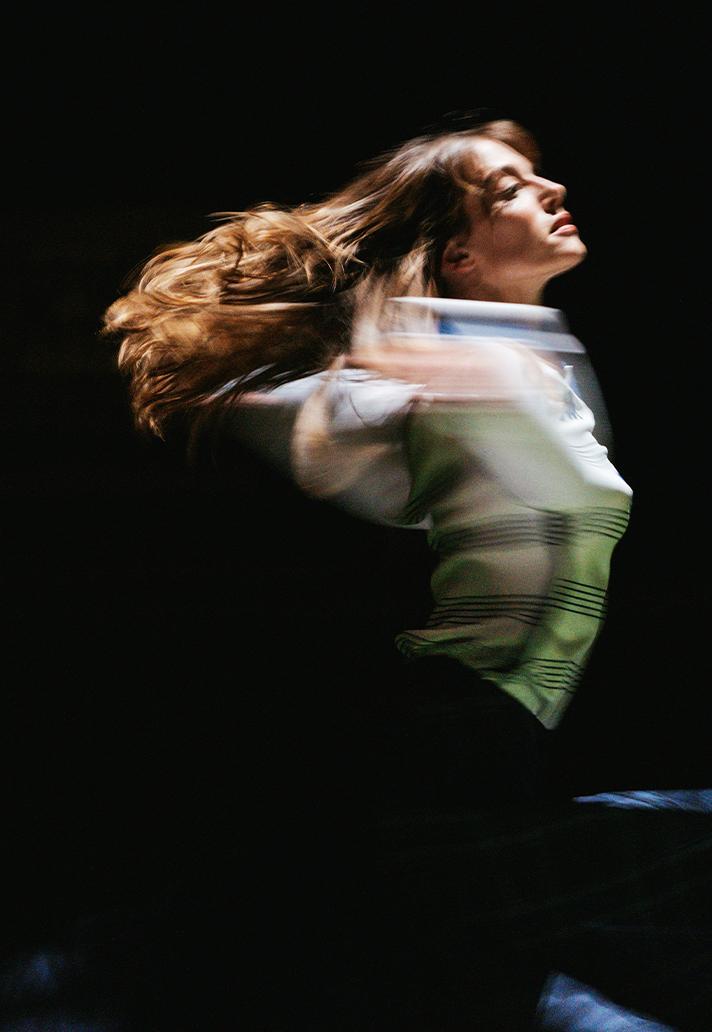
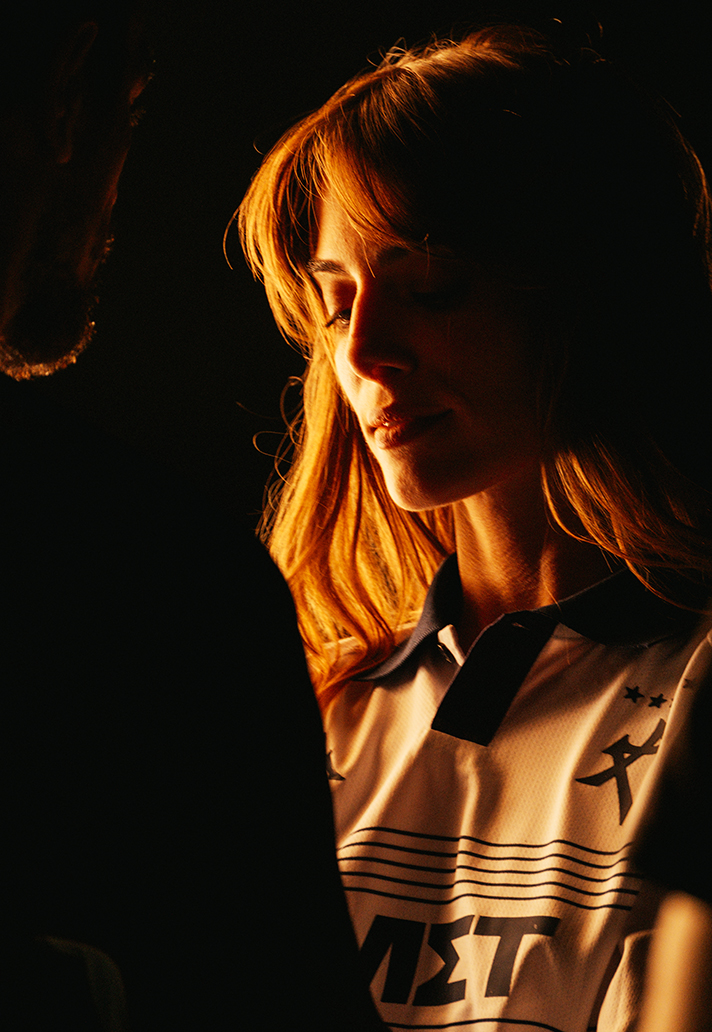
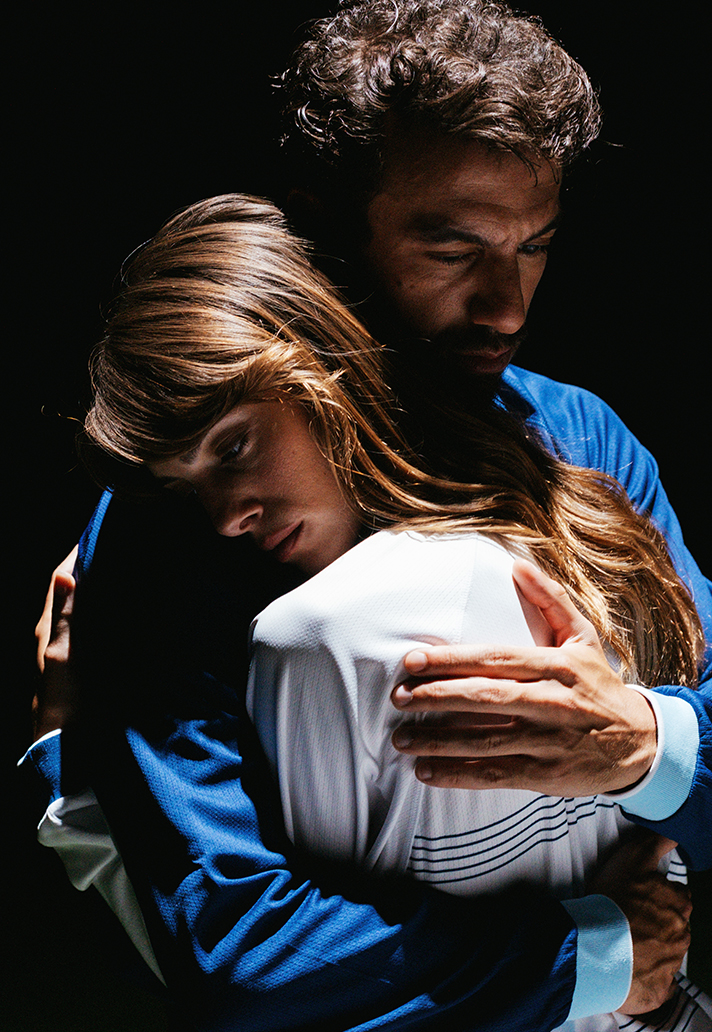
Athens Kallithea’s romance is presented most clearly in Apopse, the short film introducing the new collection. Meaning “Tonight”, it is scored by the 1963 song composed by Mimis Plessas and performed by Tzeni Vanou, and features a dance duet between Greek National Opera-trained performer Katerina Mageraki and actor Konstantinos Georgalis.
The concept began with a planned partnership with the Greek National Opera, which is based in Kallithea. When that project was pushed beyond the summer, the club decided to keep dancing anyway.
Shot at night on the pitch at El Paso, the club’s wonderfully named home ground, the film uses bodies, movement and individual expression to connect dance back to football without showing much conventional football at all. “It recalls core aspects of what we love in football, specifically the individual expression and movement of bodies, which is why we filmed right on the pitch."
The music gives the film its ’60s atmosphere, linking it neatly to the club’s founding year. Like the shirts themselves, the references are there for those who care to find them.
Another anniversary kit could have been louder, busier and far more obvious. Athens Kallithea’s is none of those things. But then, this is a club that skipped an entire kit cycle, placed a contemporary art museum across its chest and launched its return through Greek contemporary dance.
As Philipakos puts it, they’re simply going with the flow – and it’s working.
Both home and away jerseys are available exclusively at shop.akfc66.gr. From September, the shirts will also become available at the ΕΜΣΤ museum shop.