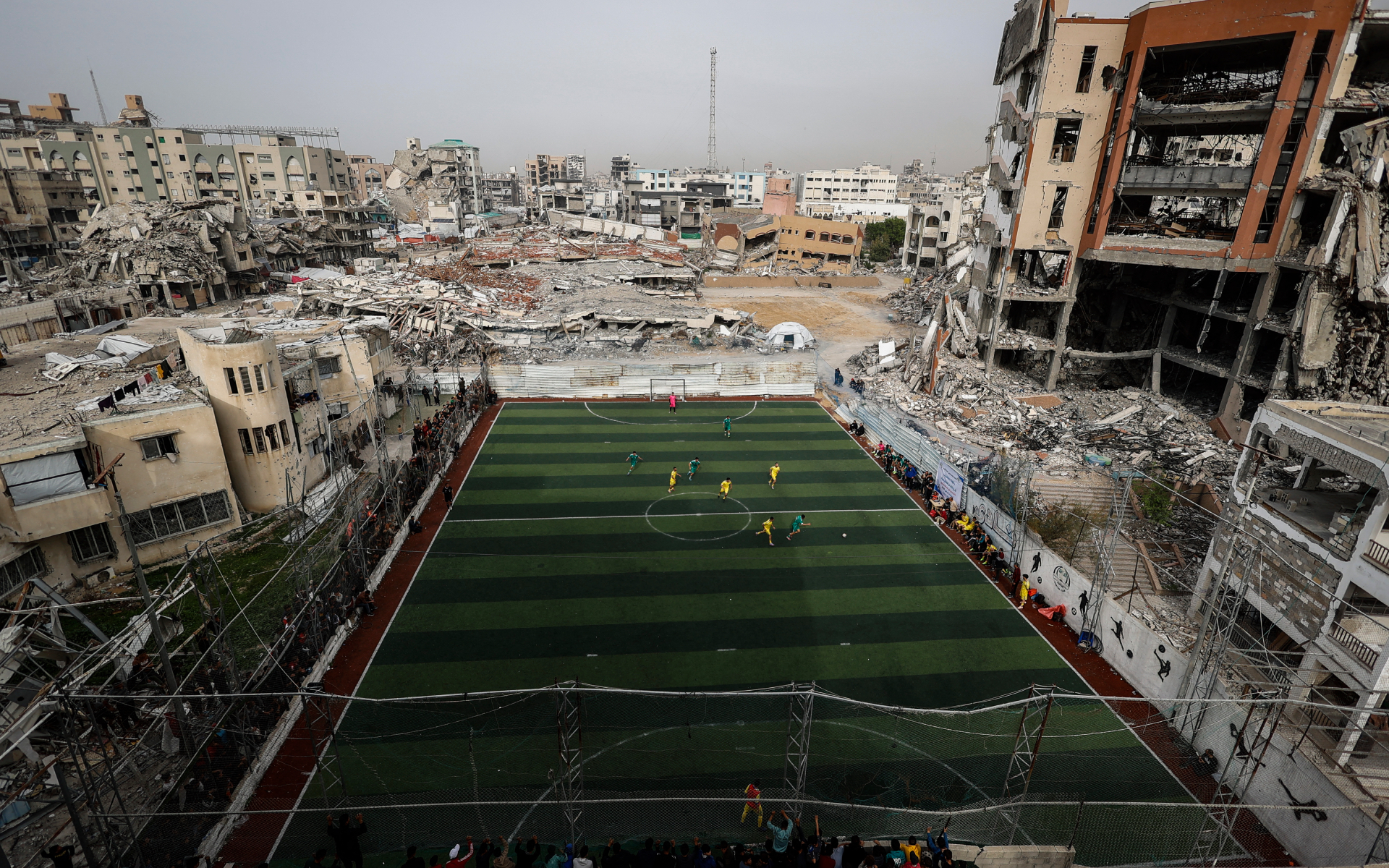
For Mohammed Balah, football didn't begin beneath floodlights or inside the managed ecosystem of a youth academy. It began on the streets of Gaza.
There, the game has always been less about organisation and infrastructure and more about instinct. Think: a ball, a few mates, and whatever patch of ground happened to be available that day.
Today, Balah, now 32, is plying his trade in Qatar with Al-Shahaniya and the Palestine national team when they are able to gather and compete. His career, however, has unfolded against a backdrop far removed from the conventional pathways of professional football.
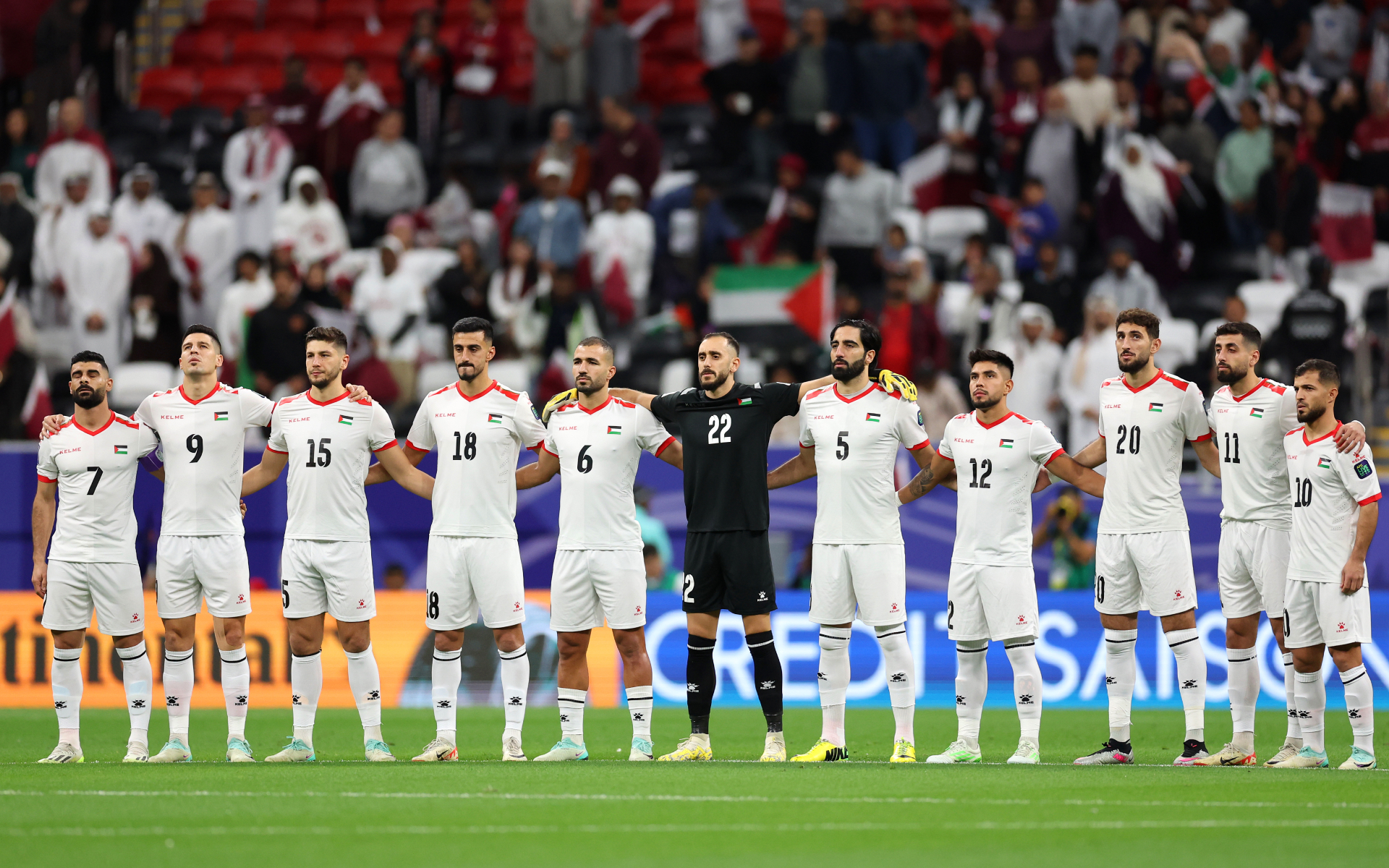
Omar AL-QATTAA / AFP via Getty Images
In late 2023, Balah returned home to Gaza after years playing abroad, rejoining his childhood club Al Sadaqa in the Gaza Premier League. It had barely been three months since that homecoming when the region was once again thrown into war following the October 7 attacks and the Israeli military response – another moment of upheaval in a career repeatedly shaped by the realities of conflict.
Adversity, though, has long been part of Balah’s story. “When I think about my earliest memories of football in Gaza, I don’t see big stadiums or perfect pitches,” he tells me. “I see the streets, sand fields, broken goals, and kids playing until sunset. Football was our happiness. It was the place where we felt free.”
Like so many players around the world, Balah’s relationship with football began in childhood, yet the environment that shaped him was markedly different. Gaza has long existed under the weight of geopolitical tension and recurring conflict, a reality that inevitably seeped into every part of life, including the game.
For those growing up there, everyday life has often been defined by instability and a reality that inevitably seeps into everything, including sport. Yet Balah is careful to begin somewhere else.
“Before the world started talking about Gaza only through the lens of war, it was simply home,” he says. “A place full of people who love life, love football, and love to dream. For me, football was never just a game. It was a way to imagine a different future.”
That sense of imagination mattered, because in places where movement and opportunity are restricted, football isn't just recreation, it's a way to see beyond the boundaries that surround you.
In Gaza, however, means learning early that football does not exist in isolation from the realities of life. Periods of violence punctuate daily routines, and for young athletes those experiences inevitably reshape the meaning of the game itself.
“Growing up in a place that experiences repeated periods of violence changes your relationship with football,” Balah explains. “Sometimes it becomes the only normal thing in your life. There were days when you could hear bombs, and the next day you still went to training. Not because life was easy, but because football gave you strength and something to hold on to when everything else felt uncertain.”
In many parts of the world, the pathway to professional football is mapped out clearly: youth academies, structured development, scouting networks and transfer opportunities that reward talent and timing in equal measure.
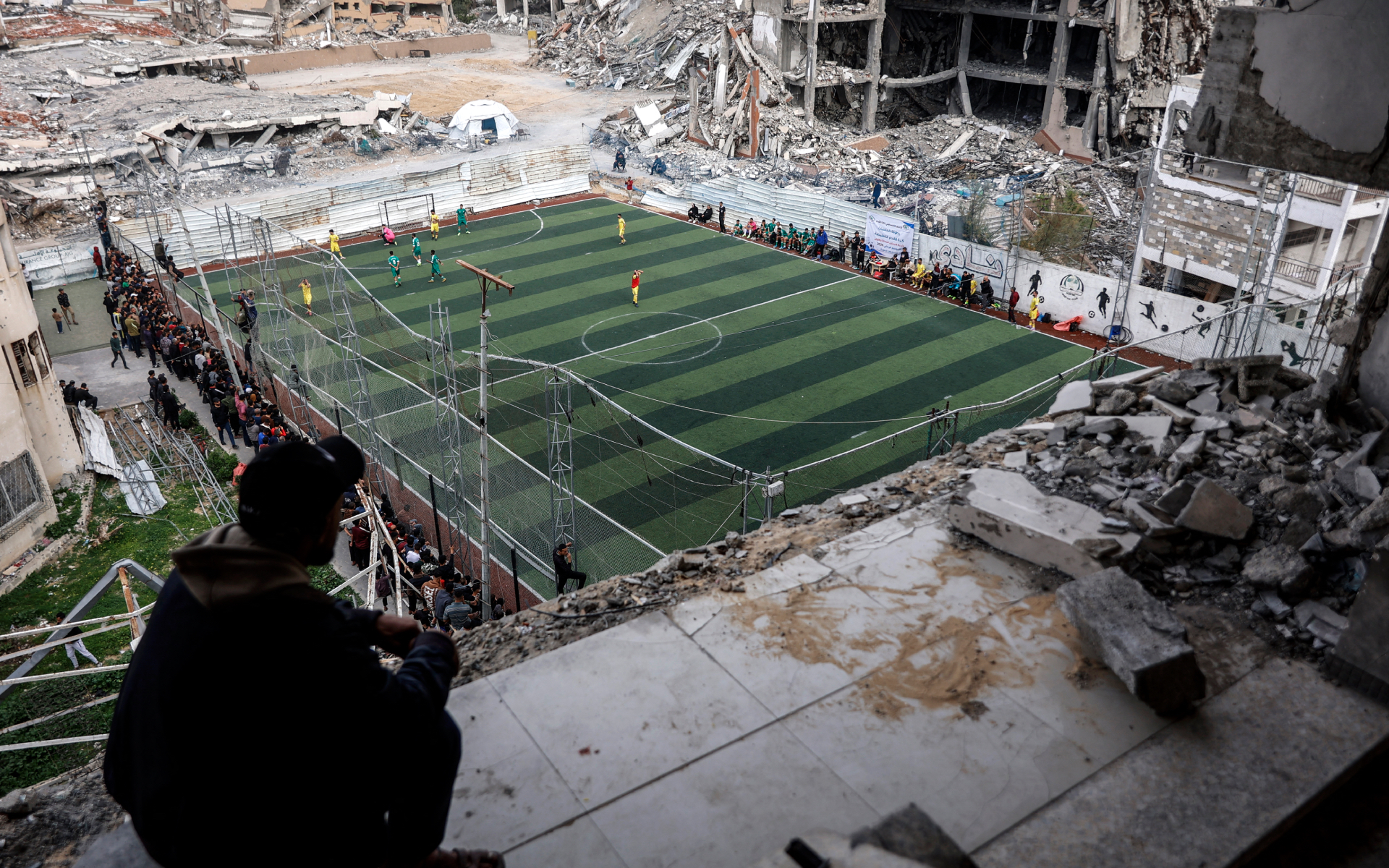
Omar AL-QATTAA / AFP via Getty Images
For players in Gaza, though, that structure rarely exists in the same way. “There are obstacles that have nothing to do with talent or hard work, like borders, travel restrictions, and instability," he says. "These things can slow down your career, but they also build resilience and a strong mentality."
Travel, in particular, has been one of the most persistent barriers for Balah. “The situation in Gaza affected my career in many ways,” he continues. “Travel was always one of the biggest challenges. Opportunities sometimes came, but reaching them was not always possible. For a footballer, timing is everything. Sometimes a chance comes once in your life, but circumstances outside football make it impossible to take it.”
It is a frustration that many talented players from the region quietly carry, the knowledge that opportunity does not always align with circumstance. “That’s one of the hardest realities of being a footballer from Gaza,” Balah continues. “You work hard, you prepare yourself, but sometimes the chance arrives and you simply cannot reach it.”
Moments like that inevitably force difficult questions and moments of questioning whether pursuing football as a career was realistic. But the pull of football has a way of overriding those doubts, especially for someone who first discovered it as a source of freedom. “Every time I stepped onto a pitch, I remembered why I started. Football is something that lives inside you, and that love always pushes me forward.”
Because in Gaza, for Balah at least, the pitch often carries a deeper emotional meaning than simply being a place to play. It becomes a rare environment where the outside world briefly recedes. “Yes, many times football felt like an escape,” Balah says. “When you step onto the pitch, for ninety minutes the outside world disappears. In places like Gaza, that feeling becomes even more powerful. Football becomes a space where you can breathe, focus, and feel alive.”
Over time, Balah has come to recognise that his presence on the pitch also represents something larger than his own career. “Being a footballer from Gaza means people see your story differently. I feel proud of that, and I want to show that players from Gaza are not only survivors – they are fighters, dreamers, and talented footballers.”
That distinction matters. “Palestinian football is often framed solely through adversity, but I believe the story is far richer than that,” he says. “Sometimes the world focuses only on the struggle, but there is also a lot of beauty and love for football in Palestinian culture.”
Away from football, the pressures of life in Gaza inevitably shape family life as well. “Sometimes the hardest part is worrying about the people you love. But those experiences also make family bonds stronger, and they remind you why you keep pushing forward.”
Looking toward the future, Balah hopes that his story is understood not simply as one shaped by conflict, but as one defined by perseverance. “I want people to see me not only as a footballer from Gaza, but as someone who refused to give up,” he says. “My journey has not been easy, but that is exactly what shaped me – not only as a player, but as a person.”
Football remains the constant thread through all of it – the childhood freedom, the escape, the ambition and the responsibility. “At the end of the day, my journey is not only about football, it’s about believing in a dream even when the world around you makes that dream feel impossible.”
“Football has given me a voice and a path forward, and every time I step onto the pitch, I carry my story, my people, and the place I come from with me.”
Balah, too, is just one of many powerful reminders that talent can emerge anywhere – even in the places the world most often sees only through the headlines.