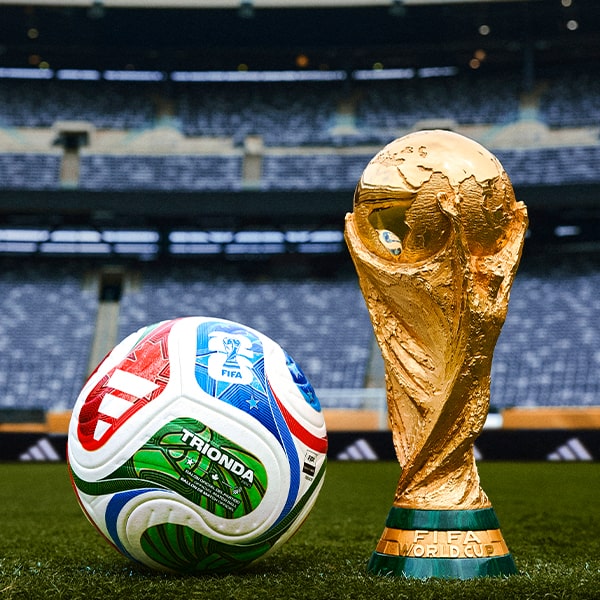
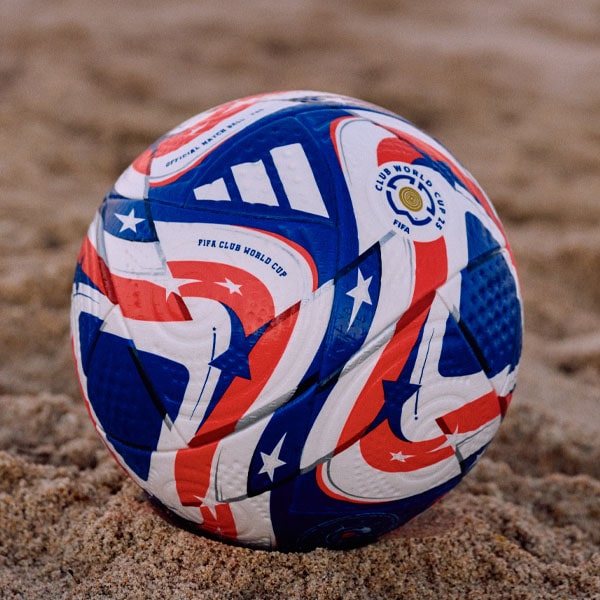
The World Cup ball requires an icon, and for 2026, that is TRIONDA. A ball set to be the heartbeat of the upcoming tournament. You know we had to speak to the creative minds behind the process, talking all things from technology that transcends the game, to a visual design that will build a legacy.
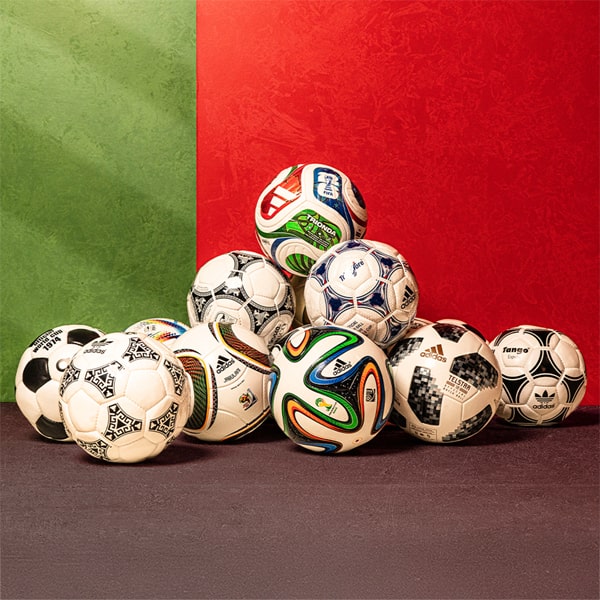
Every world cup has its icon. Each has a ball that captures the spirit of that specific tournament, the energy of that era. From the Telstar that started adidas’ journey in the World Cup, to the Jabulani that lit up South Africa in 2010. And now, we have Trionda. Designed by two of adidas’ leading creative minds, Solene Stoermann and Hannes Shaefke, the ball represents both performance innovation as well as a legacy for a new chapter in football’s journey.
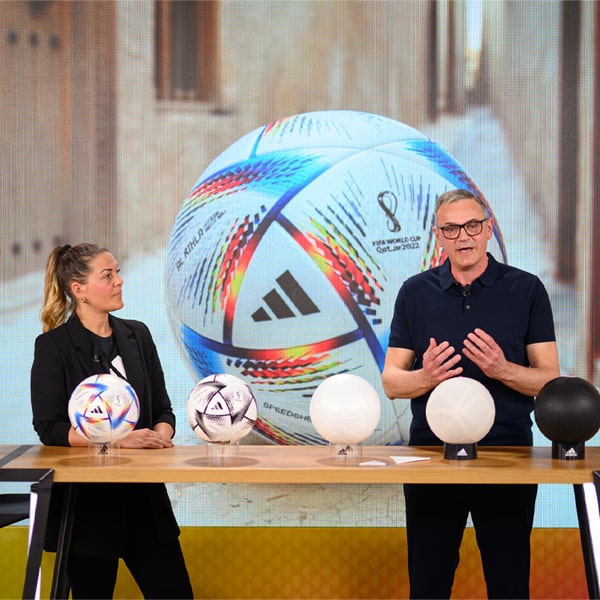
We caught up with Solene and Hannes to talk about the process behind building this icon, from the inspiration that shaped its look, to the technology that puts it at the top of the game. A deep dive into what will define the next World Cup.
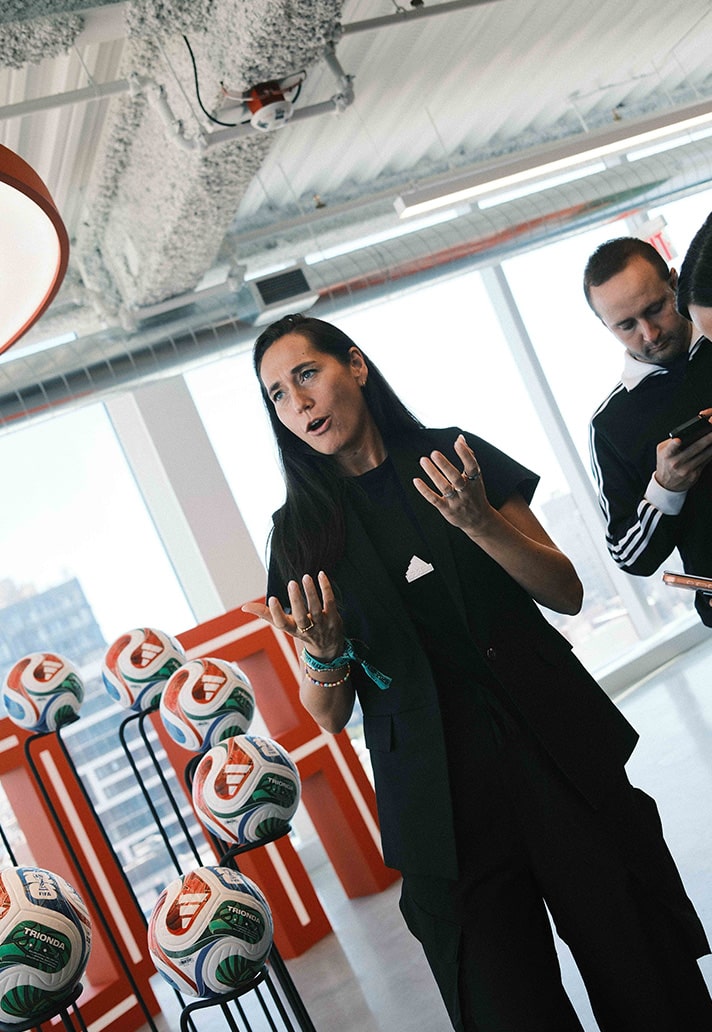
First up is Solene, who walked with us through the visual aesthetics of the ball, from colours, to graphics, to panelling.
Let’s start with the inspiration. Where did the idea for the Trionda World Cup ball design come from?
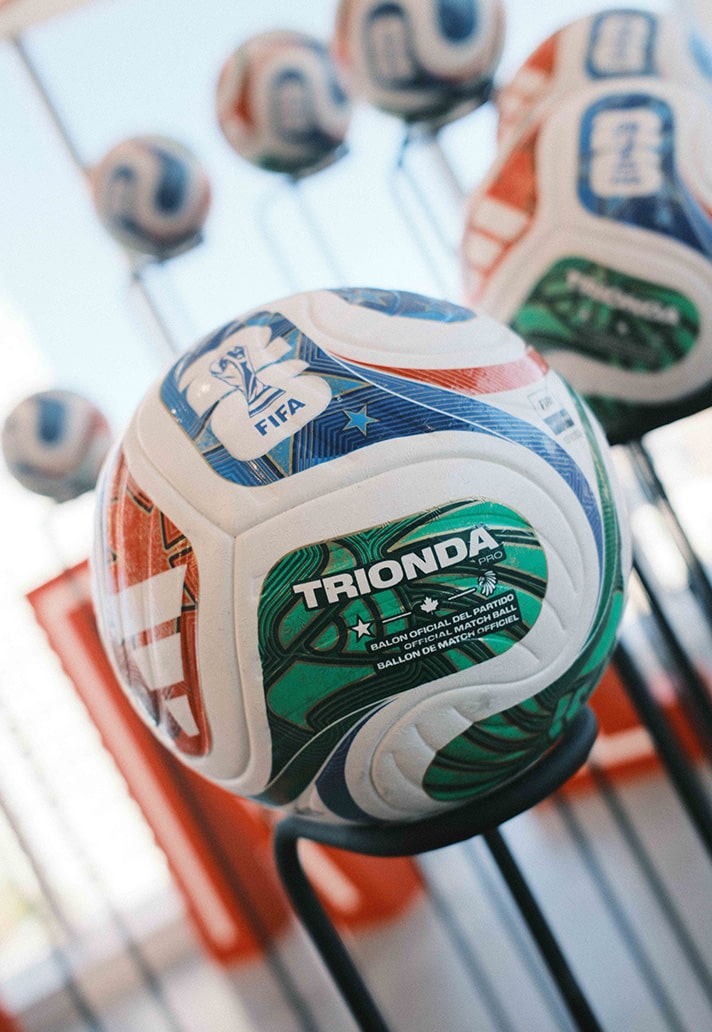
First of all, we wanted to pay homage to the three host nations — the U.S., Canada, and Mexico. It’s the first time in history that three countries have united to host a World Cup, and that felt incredibly unique and special to us.
We wanted to express that sense of unity in the design. But beyond that, we also wanted to celebrate the next wave of football — a new generation of players. Many will be playing in their first ever World Cup, so the idea of a “wave” became symbolic of that energy and momentum.
The wave also connects to the fans. Everyone knows the “Mexican wave” — it’s a symbol of togetherness, of people connecting regardless of which team they support. It represents that shared love for football. So the wave became a recurring design language — both in concept and in the physical structure of the ball.
That’s beautiful. Can you walk us through the construction and design details?
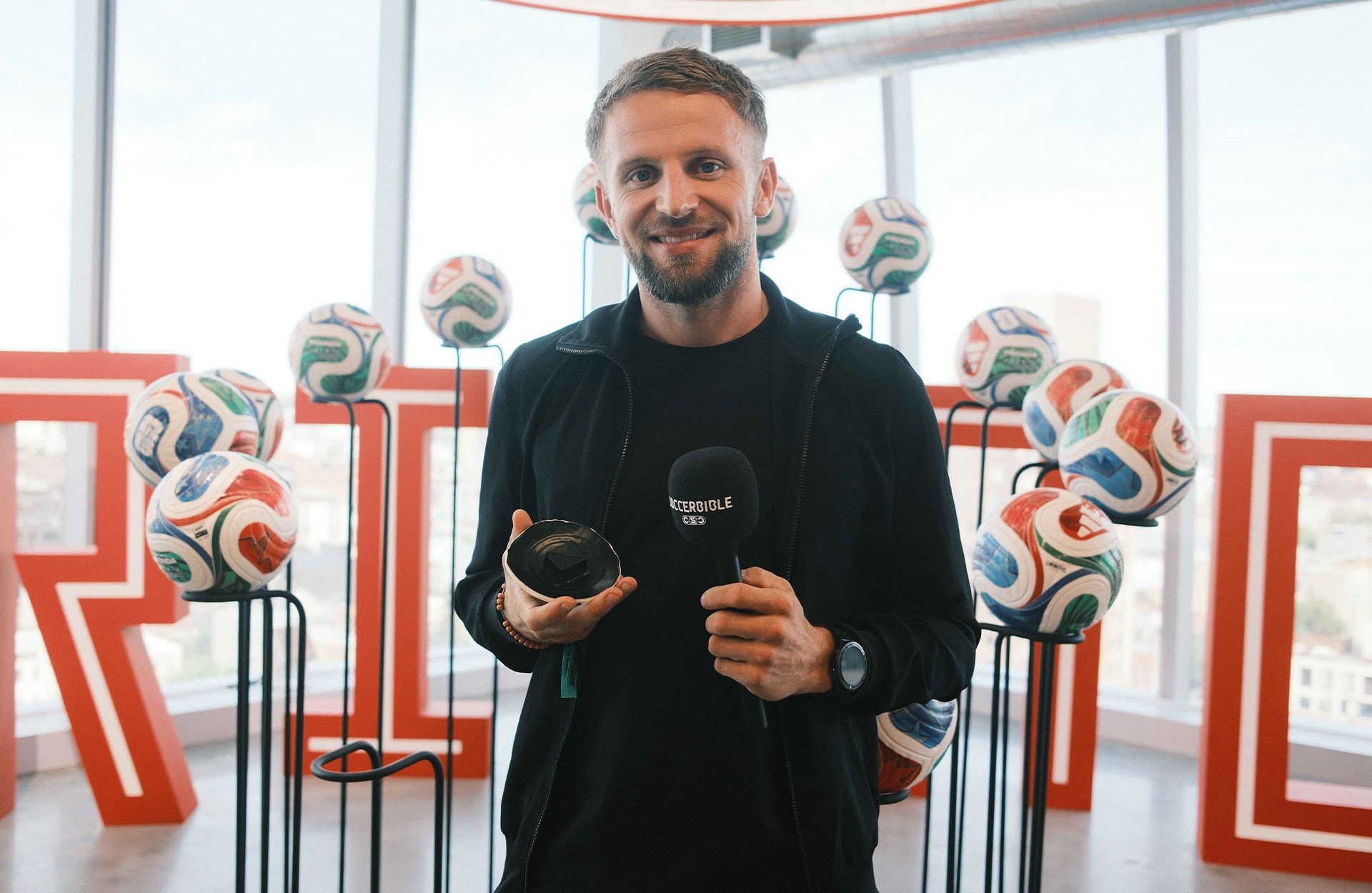
Absolutely. The Trionda features a new four-panel construction, and each panel has three arms. Each arm represents one of the host nations. We chose blue for the U.S., green for Mexico, and red for Canada. All three colours come together at the centre of each panel in the shape of a triangle, symbolising unity and connection. We didn’t want the story to live only in colour, though. We also included iconography that’s instantly recognisable to fans around the world — stars for the U.S., the maple leaf for Canada, and the eagle for Mexico. You can see these not only in the visual blocking but also in the texture of the ball. When you look closely, the tiny stars, leaves, and eagles are embossed into the surface, providing both symbolic meaning and functional grip. It’s a subtle detail, but it adds a lot of depth.
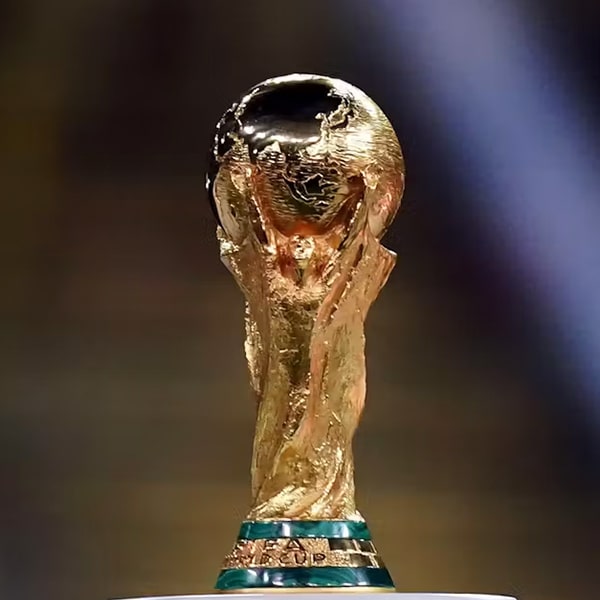
And finally, because it’s a World Cup ball, we wanted it to feel premium — to have that sense of gold that’s synonymous with the trophy itself. So we incorporated golden elements throughout the design to connect it directly to football’s greatest prize.
The balance between heritage and innovation is always key with a World Cup ball. How do you find that balance?
That’s something we think about constantly. adidas has been designing World Cup balls since 1970 — more than fourteen editions now — and every one of them carries its own identity. Each World Cup is unique, so every ball should be too. We honour the heritage, but we also push forward with innovation — whether that’s in construction, material, or design philosophy. Ultimately, it’s not just about making equipment. For us, it’s about writing history. Each ball becomes part of football’s cultural legacy, something that represents a moment in time.

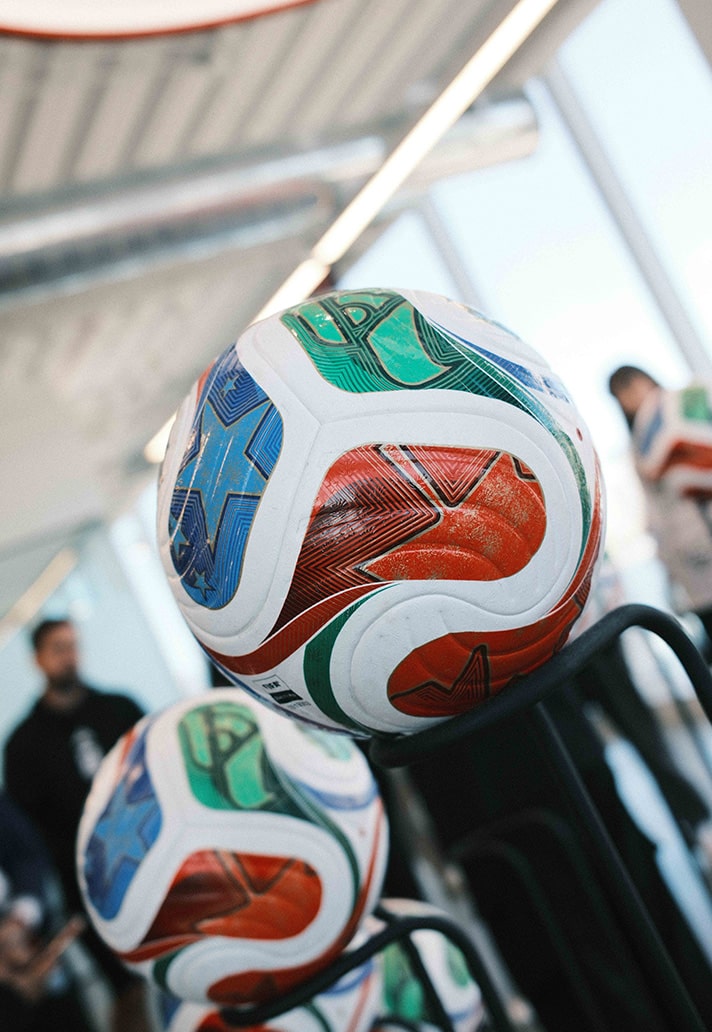
You mentioned that it’s not just design — there’s performance at play too. How do you balance art and function?
Exactly — it’s both. Of course, design plays a huge part in how the ball feels emotionally, but performance always comes first. The ball has to perform perfectly for every player on the pitch. That’s why a big part of our process is dedicated to performance testing. We ensure that every surface, panel, and texture is optimised for flight, accuracy, and control. The artistry means nothing if the players can’t trust it. So it’s a constant collaboration between beauty and precision.
Is there a particular detail on this ball that’s your personal favourite?
Honestly, I love all of it! (laughs) The combination of details is what makes it special. The Trionda has been in development for about three and a half years, so it carries the work, emotion, and dedication of so many people. Seeing it finally come to life — seeing it revealed to the world — that’s the moment of pride for all of us.
Out of all the adidas World Cup balls over the years, do you have a personal favourite?
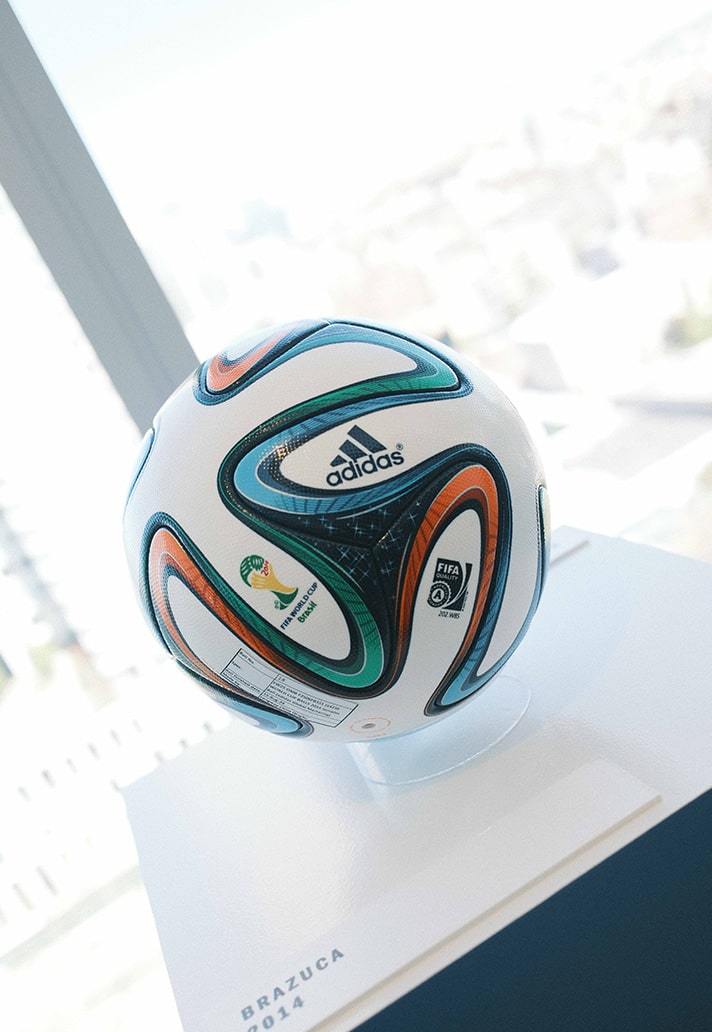
Of course, this one is closest to my heart — but if I had to choose another, I’d say the Brazuca from 2014. It was so colourful, so full of life. It captured the energy of that tournament perfectly, and I think it shares a similar spirit with Trionda — bright, expressive, and full of joy.
Looking ahead to the tournament — is there a player or team you’re secretly hoping will score the first goal with this ball?
That’s such a tough one! I just hope we see a lot of goals scored with this ball. But yes, as a German, I’d love to see Florian Wirtz score Germany’s first. That said, I’d also love to see both young and legendary players leave their mark with it — maybe Lamine Yamal and Messi both finding the net. That combination of youth and experience would feel poetic.
And finally, if you could describe the Trionda ball in three words?
Joy. Connection. Spirit.
It’s a symbol of football’s power to unite people across borders — the love of the game that brings everyone together.
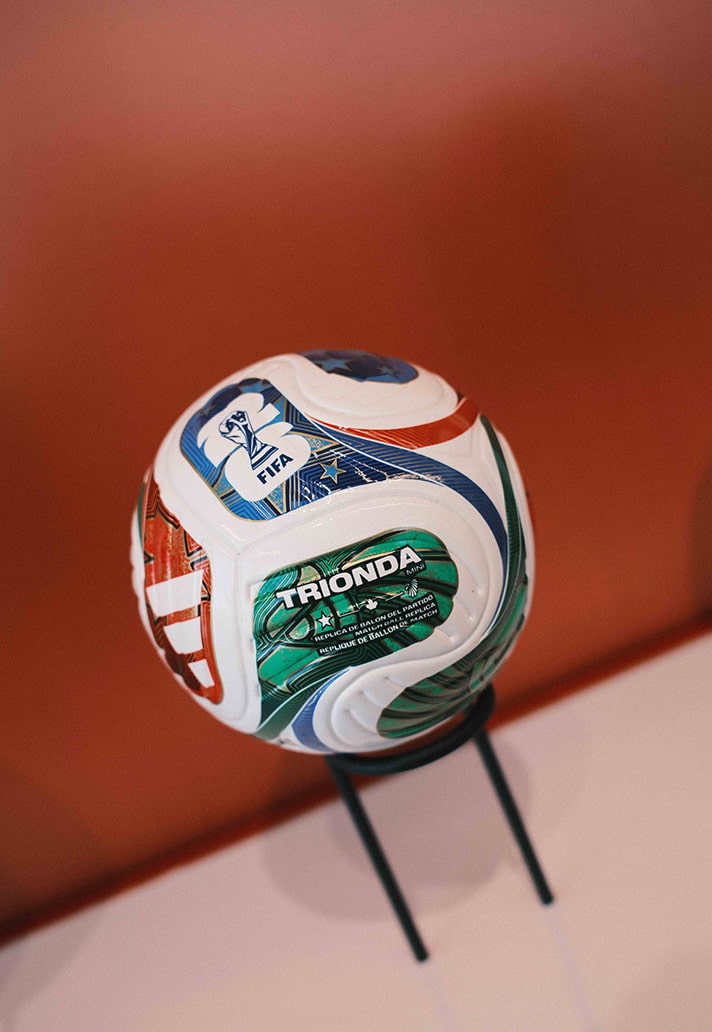
And onto Hannes, giving us a closer insight of the innovation that Trionda is bringing to the pitch next year.
The Trionda ball looks incredible — but beyond the visuals, can you tell me more about the technology behind it? What takes this ball to the next level?
I’m glad you asked, because it’s pretty unique. The World Cup ball features a sensor that sits inside the bladder. What’s crucial is that players can’t feel any difference — they shouldn’t be able to distinguish this ball with the chip inside from one without it. The real magic, though, is what the chip actually does. It allows us to track everything that happens on the pitch — every pass, every shot, every touch. We often call it the heartbeat of the ball, because it brings the ball to life. Even the smallest touches, like a potential handball, can be detected and visualized on a screen — giving referees precise data to help make decisions in high-pressure moments.
How important is it to keep pushing forward with new technology year after year?
It’s incredibly important. From adidas’ perspective, it’s essential that we match the progression of the game itself. Football keeps getting faster, more technical, more precise — and we have to evolve alongside it. A few years ago, VAR wasn’t even part of football. Now it’s a crucial tool. So, our responsibility is to support that evolution — to make the game more fluid and more accurate. That’s where tracking and connected ball technology really make a difference. It reduces delays, helps referees, and supports fair play. It’s all about enhancing the experience without interrupting the flow of the match.
How do you collaborate with the designers who handle the visual side — balancing performance technology with aesthetics?
That’s the beauty of working in a cross-functional team. Both sides — the visual and the functional — need to complement each other. The look of the ball is vital; it needs to carry the emotion, the beauty, and the identity of the World Cup. But performance always comes first. At adidas, our number one goal has always been to provide the best possible product for the athlete. That’s been true since the brand was founded. So the visuals have to celebrate that purpose — the design should feel intuitive and iconic, but always serve the performance of the ball.
Can you talk about how you test a ball like this? What does that process look like?
The testing process is one of the most exciting parts. It starts in the lab — where we test basic things like weight, circumference, and durability — around 300 lab tests, actually. But then we go deeper: accuracy, balance, aerodynamics, and how the ball behaves with the sensor inside.
Then comes player testing. That’s where it really matters. We’re lucky to work with an incredible global network of players and clubs who test prototypes for us. We’ll get feedback, adjust the design, and repeat — an iterative process that can last years. In the case of the Trionda, the development spanned around three and a half years. Every round of feedback helped refine how it moves, feels, and performs.
That’s fascinating. So with all that in mind — what do you think the future of football technology looks like in the next few years?
That’s a tough one! Before the Qatar World Cup, if we’d said we were going to put a chip inside the match ball, people would’ve laughed. And now here we are. Looking forward, I think performance tracking will keep growing in importance. The ball itself could become the final puzzle piece in creating a fully connected game — one where every movement, every touch, every action contributes to deeper understanding and analysis.
There’s still huge potential, especially as the game keeps getting faster. The ball will always be round — that’s never going to change — but how it interacts with technology will continue to evolve in amazing ways.

Read about the new 'Trionda' ball at soccerbible.com