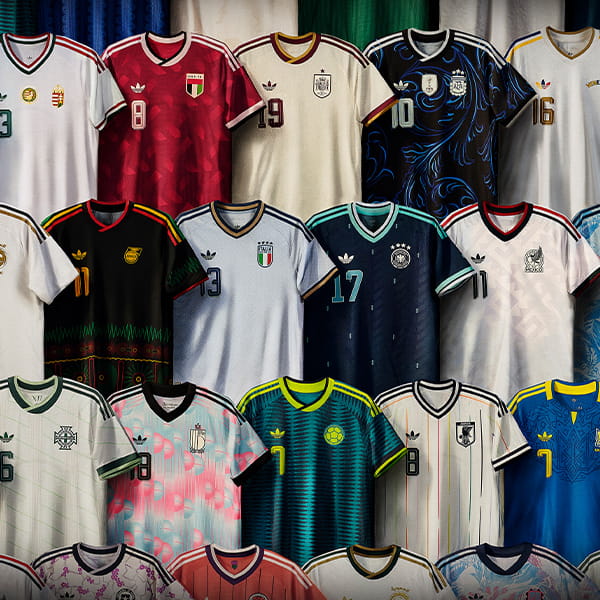
Football shirts have always carried stories, but rarely do they invite you to look closer, slower, deeper. Chile’s new away kit does exactly that, transforming fabric into a cultural surface where art, landscape, memory, and craft converge, and where Creative Soccer Culture becomes something you can see, feel, and trace stitch by stitch.
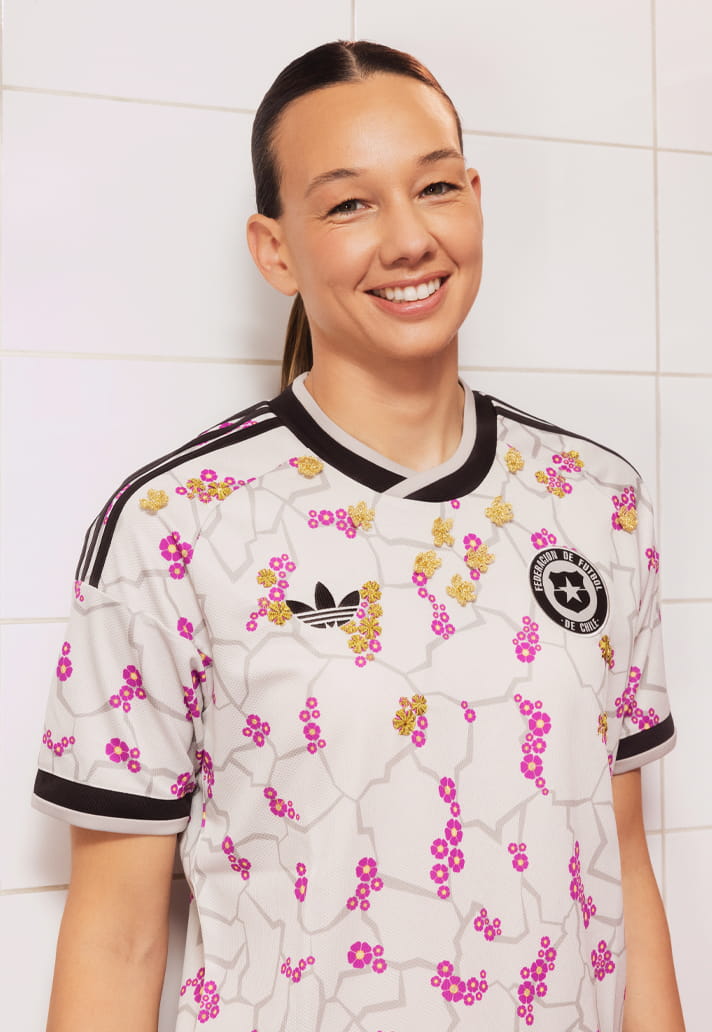
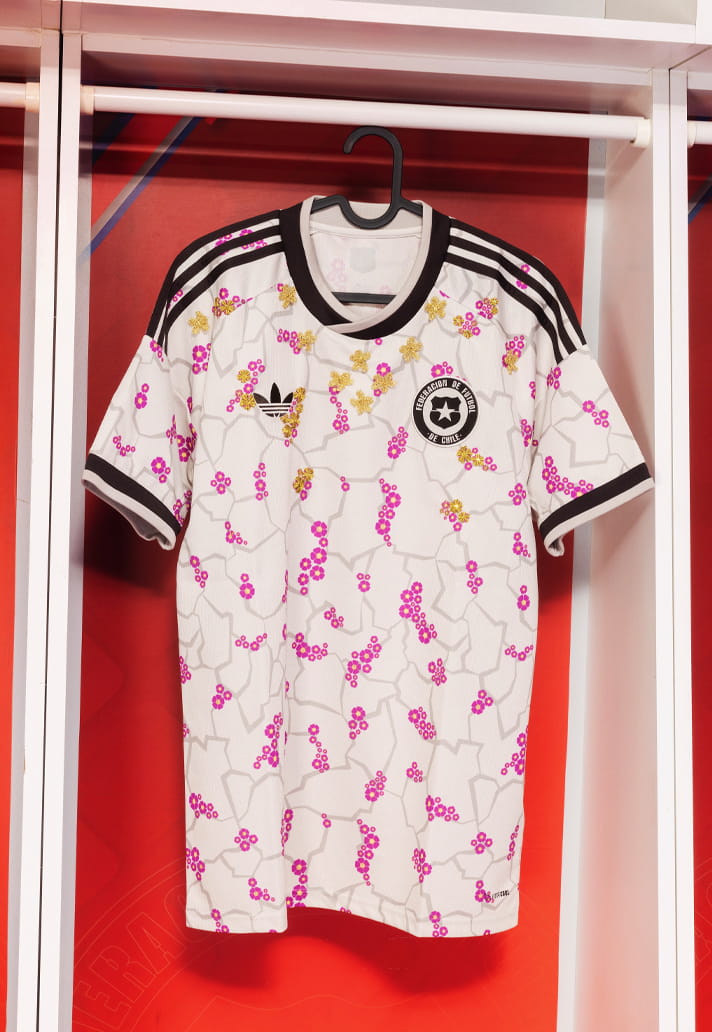
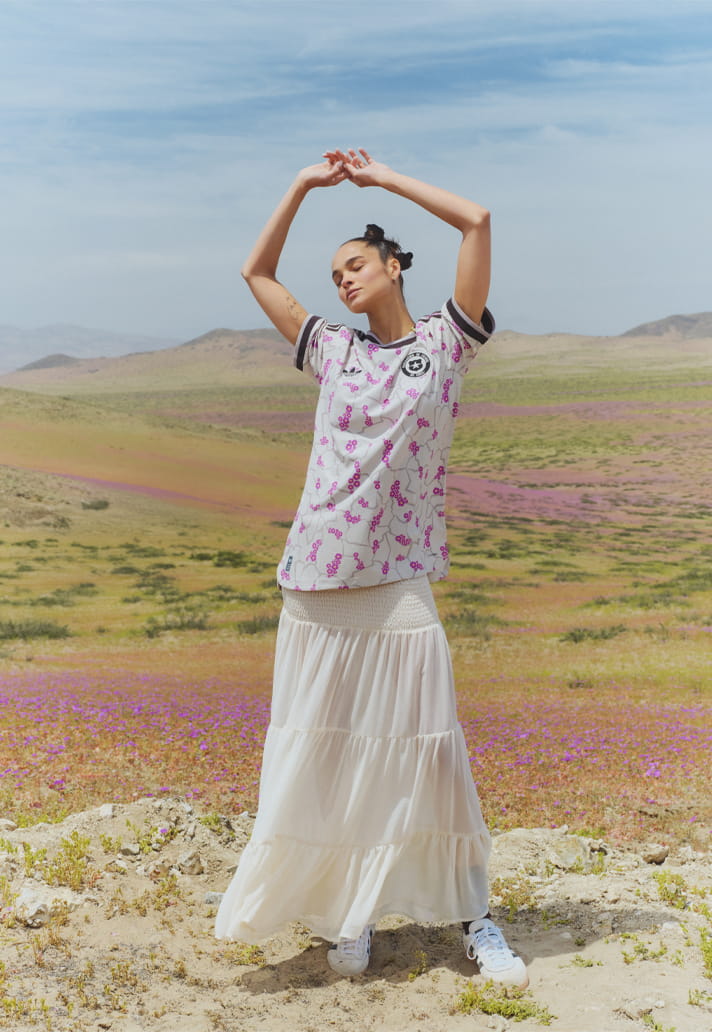
As part of the wider rollout of their 2026 Federation Away Kits, adidas revealed a striking new away shirt for Chile, one rooted not in nostalgia, but in geography, ecology, and creative expression. The inspiration was the Desierto Florido (Flowering Desert), one of the most extraordinary natural phenomena on the planet. Occurring exclusively in northern Chile, the event sees the Atacama Desert – often described as the driest place on Earth – burst into colour after rare rainfall, as dormant seeds awaken and nearly 200 species of flowers bloom across the arid landscape.
Following an exceptional superbloom in 2022, Desierto Florido National Park was officially created to protect this fragile ecosystem and its many scientific marvels. It is a place defined by contradiction: life emerging from drought, colour from dust, hope from apparent desolation. Those same tensions – between fragility and strength, patience and eruption – sit at the heart of Chilean identity. And they now sit at the heart of Chile’s new away shirt.
The launch arrived under the banner “From Chile to the World”, a campaign that reframes the football kit not simply as performance wear, but as a cultural artefact. The jersey draws global attention to one of Chile’s most precious landscapes while signalling something more ambitious: an evolving sense of Creative Soccer Culture in which football becomes a platform for storytelling, artistic collaboration, and national self-expression.
For the first time in the country’s history, Chile’s away jersey moves away from its traditional white or blue palette. Instead, it adopts a soft yet striking pink tone, inspired by the flowers that carpet the desert during the Desierto Florido phenomenon. The colour choice is quietly radical, embracing delicacy without sacrificing intensity, and challenging long-held assumptions about how a national football shirt should look.
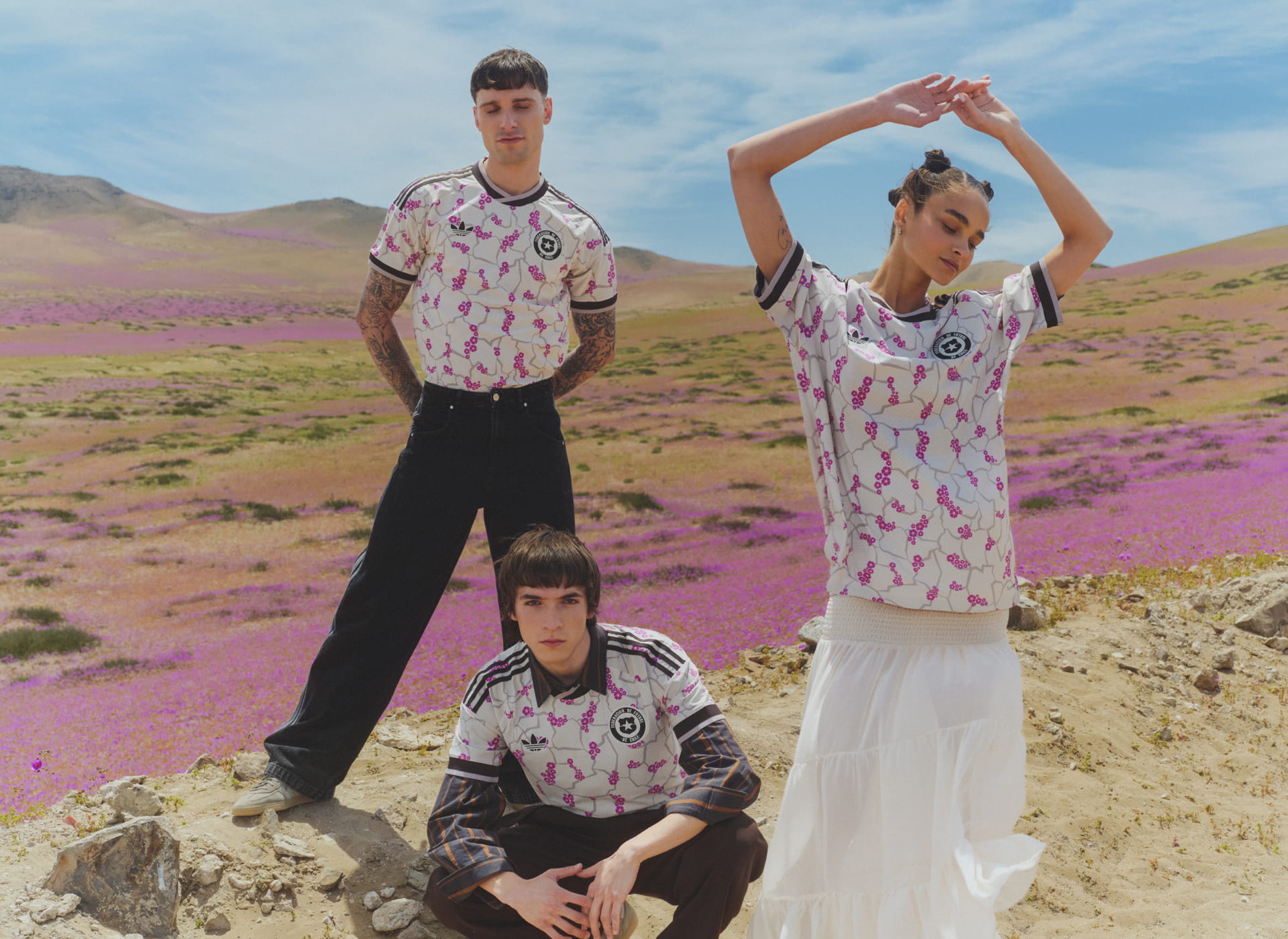



But adidas didn’t stop at design inspiration. As part of the wider campaign, the brand invited three Chilean artists – Trini Guzmán, Cecilia Acevedo, and Aurora Anita – to embellish the jersey using their own distinct crafts. Each artist was given the freedom to reinterpret the shirt through their personal practice, transforming it into a canvas for embroidery, crochet, and goldwork. In doing so, adidas extended football’s visual language and offered these artists a global stage.
What emerged is not a single artistic vision, but a conversation – between sport and craft, speed and slowness, mass culture and the handmade. It is here, in these intersections, that Creative Soccer Culture truly comes alive.
Trini Guzmán
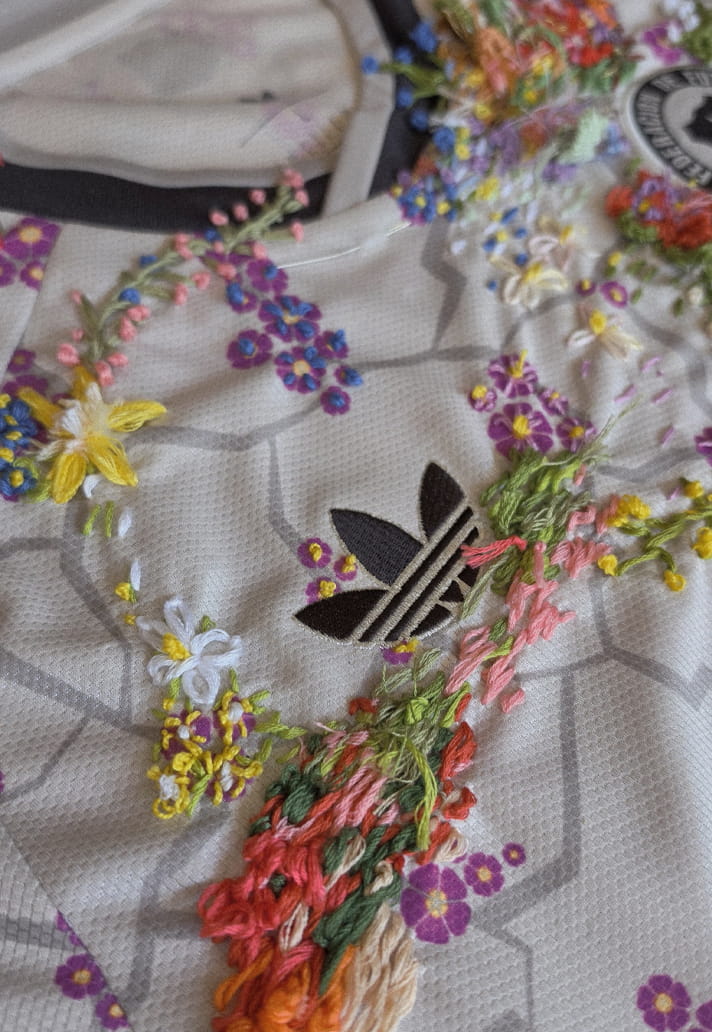
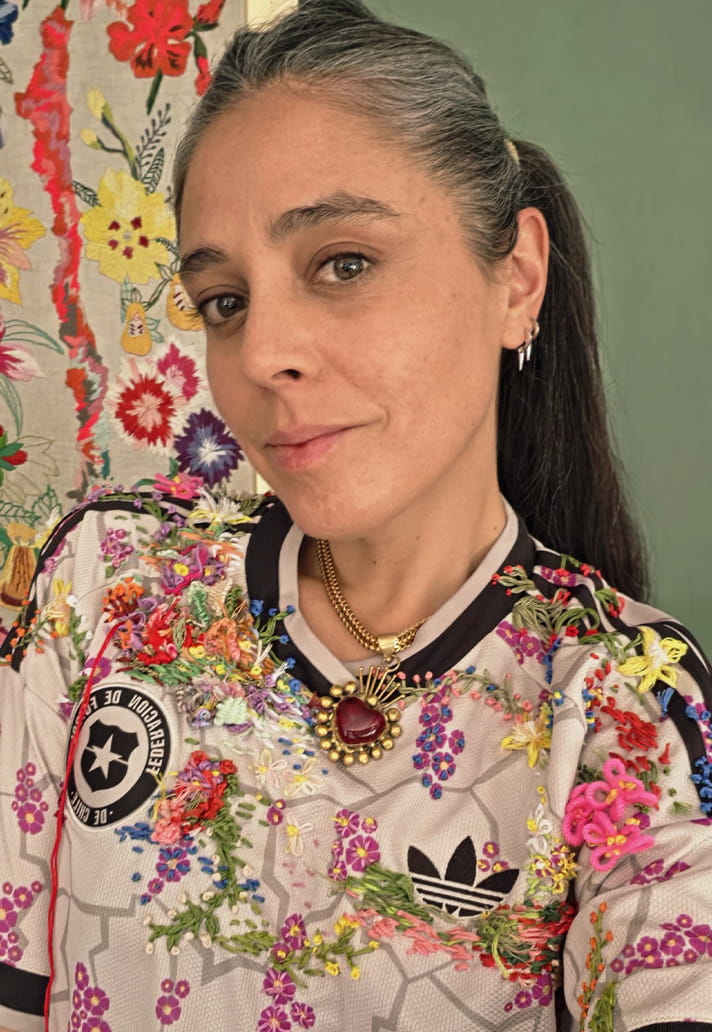
Trini Guzmán has built a practice defined by experimentation and instinct. Self-taught and intentionally rule-breaking, her embroidery prioritises intuition over convention, allowing colour and texture to emerge organically. Nature has long been her primary reference point, particularly the contrasts found within Chile’s vast and varied landscapes.
That made the Desierto Florido an immediate and natural connection. For Guzmán, the phenomenon is less about spectacle than rhythm – the quiet persistence of life waiting for the right conditions to emerge. “Embroidery, for me, is a slow, meditative process,” she explains. “There’s a cadence in building something stitch by stitch that mirrors the quiet persistence of nature.”
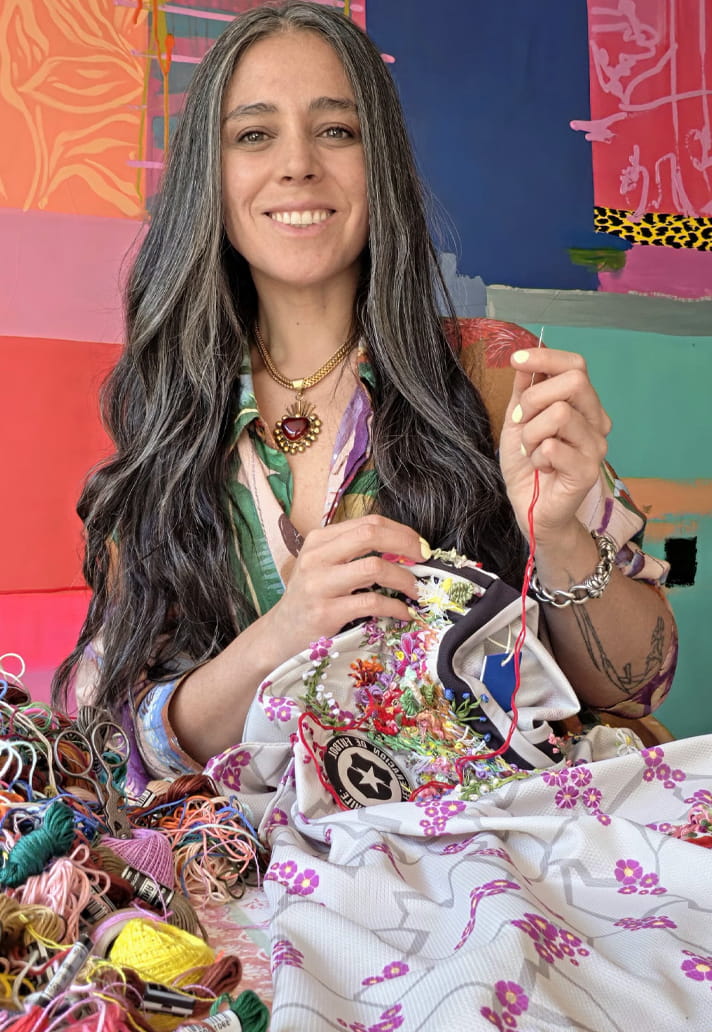
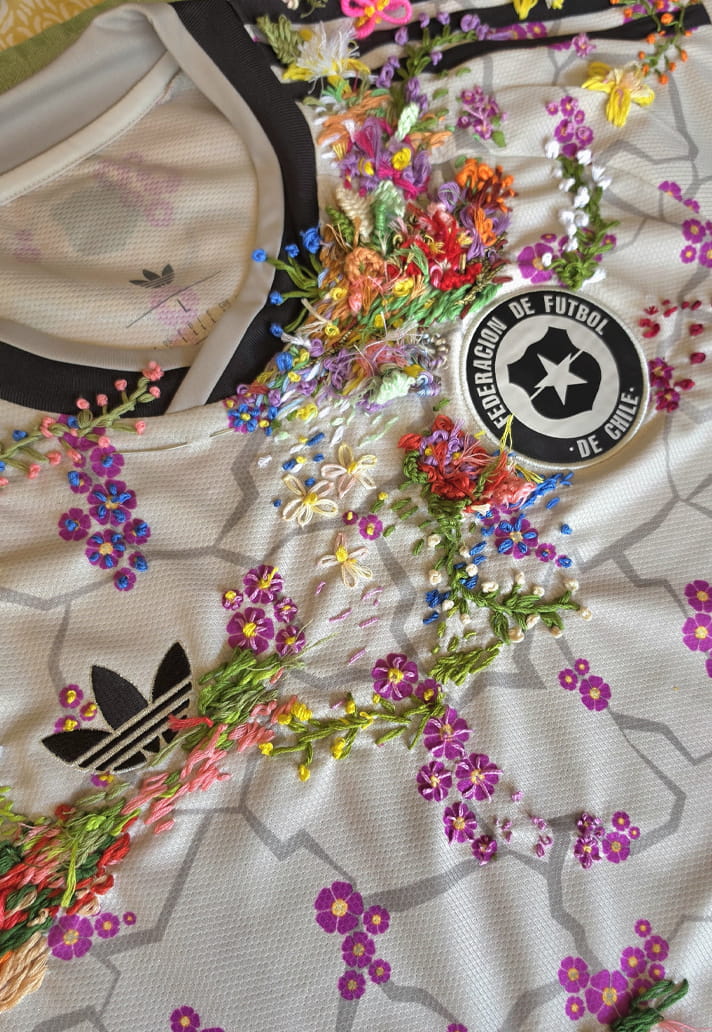
Her intervention on the Chile away shirt leans into that sense of wonder. Rather than attempting to control the surface, she allowed the embroidery to grow intuitively, echoing the way flowers appear unexpectedly across the desert floor. Colour, in her hands, becomes a language of resilience and proof that creativity finds ways to thrive even in the most unlikely environments.
Customising a football jersey also presented a conceptual challenge. Shirts are rigid objects, governed by rules, traditions, and deep cultural meaning. That tension is precisely what hooked her. “I’m drawn to projects that challenge convention and allow different worlds to collide,” she says. “Customising a football jersey – something so structured and culturally loaded – was an opportunity to push boundaries.”
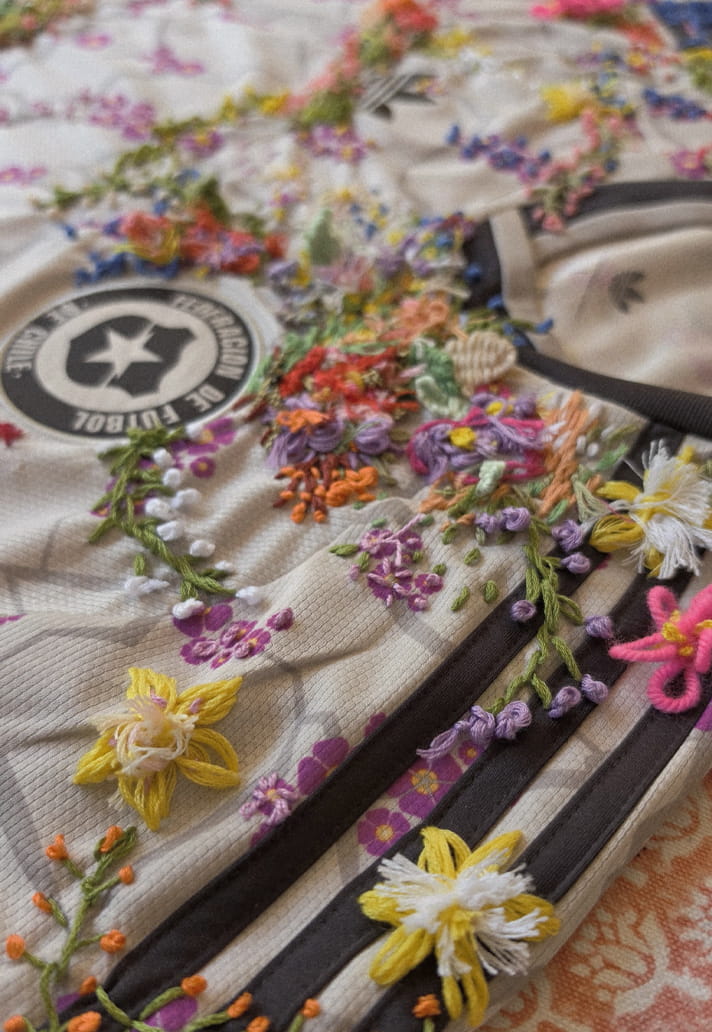
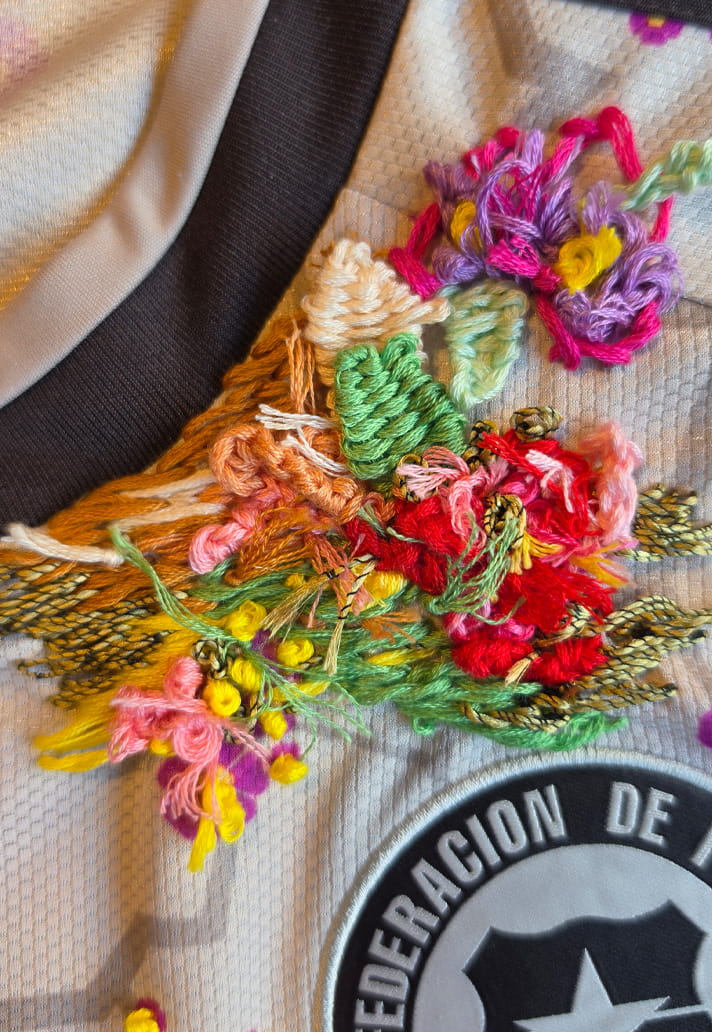
By merging the emotional force of football with the tactile intimacy of embroidery, Guzmán expands how a kit can communicate. The shirt becomes not just a symbol of allegiance, but a space for dialogue, between heritage and modernity, discipline and freedom. Textile art, she believes, carries something ancestral within it: the imprint of the human hand, the warmth of intention. Bringing that into football helps the sport’s visual culture evolve, blending history with contemporary identity.
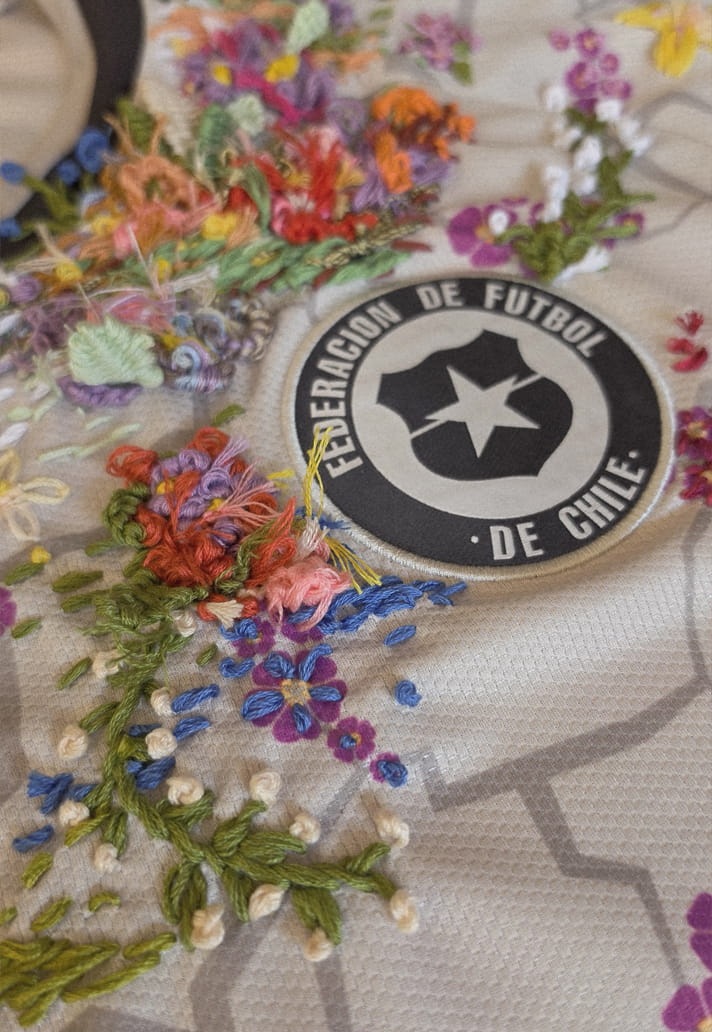
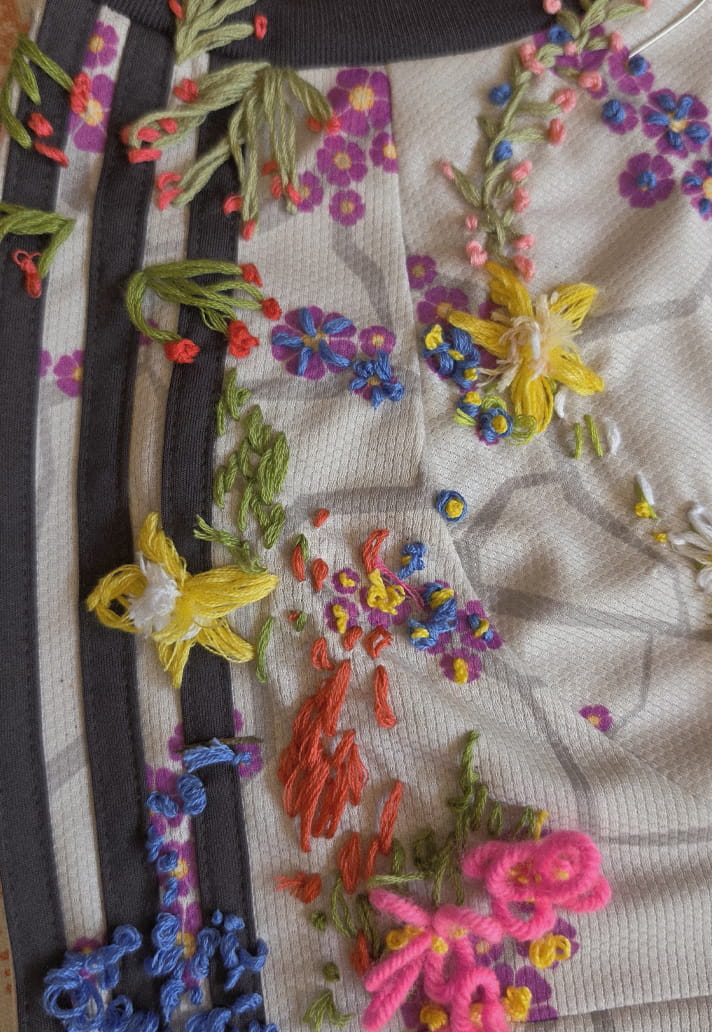
Visibility is also key. Guzmán has cultivated a global community around creative freedom, and the scale of a national team jersey offered something no gallery wall could. “Working on a football shirt offered a unique visibility that other formats don’t,” she notes. “This project goes beyond aesthetics – it celebrates the Desierto Florido while also sharing a broader message of resilience.”
In that sense, her work on the shirt feels quietly optimistic. A reminder that transformation often begins with something small. One stitch. One idea. One unexpected bloom in the desert.
Cecilia Acevedo
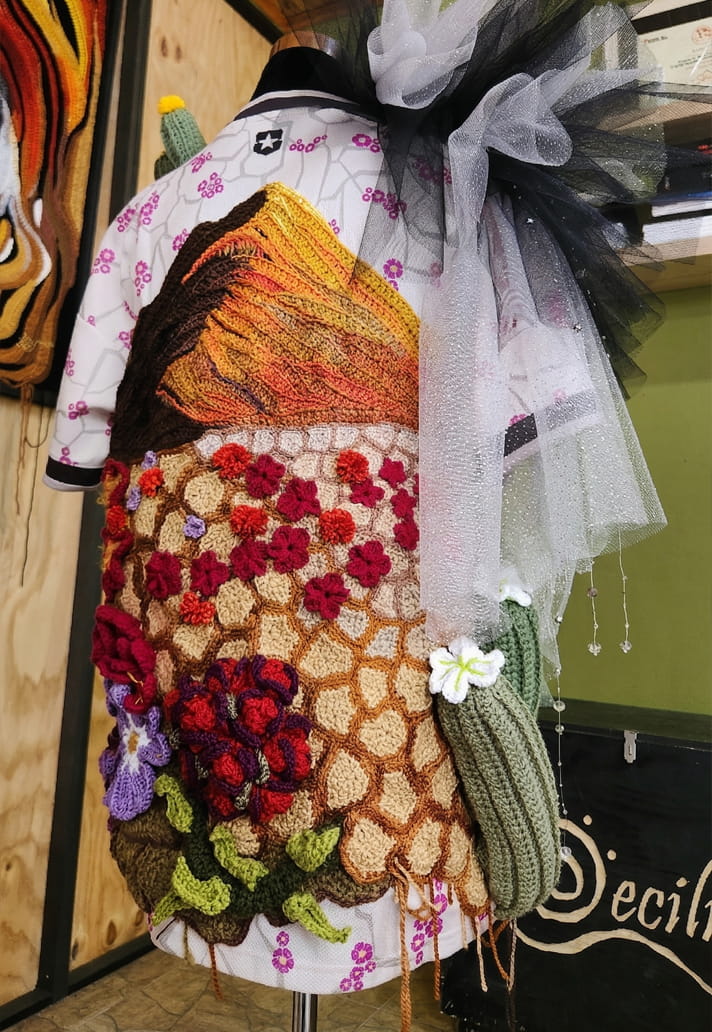
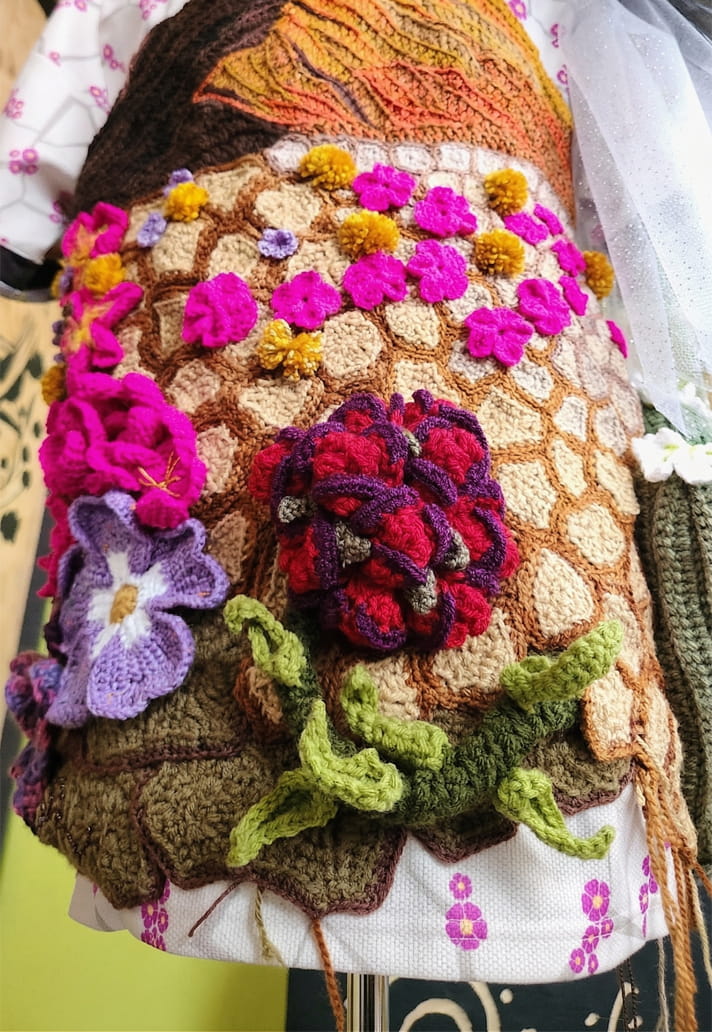
Where Guzmán gravitates toward colour and intuition, Cecilia Acevedo’s work begins in tension. Her acclaimed “Pictorial Crochet” technique rejects patterns and symmetry, embracing organic forms shaped by memory, resilience, and lived experience. With a background in kinesiology and years spent working alongside elite athletes, Acevedo understands endurance not as a metaphor, but as a physical and emotional reality.
That perspective profoundly shaped her interpretation of the Desierto Florido. Rather than focusing on the bloom itself, she was drawn to what comes before it. “My focus wasn’t the flowers, but the threshold,” she explains. “The cracked earth, the storms, the tension that precedes life.”
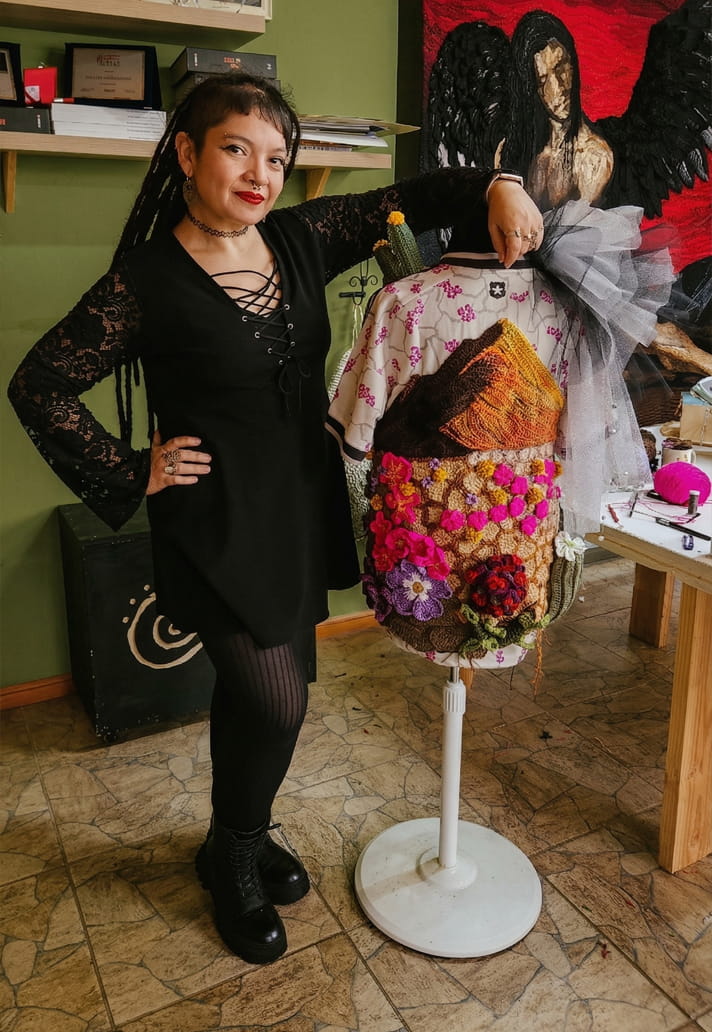
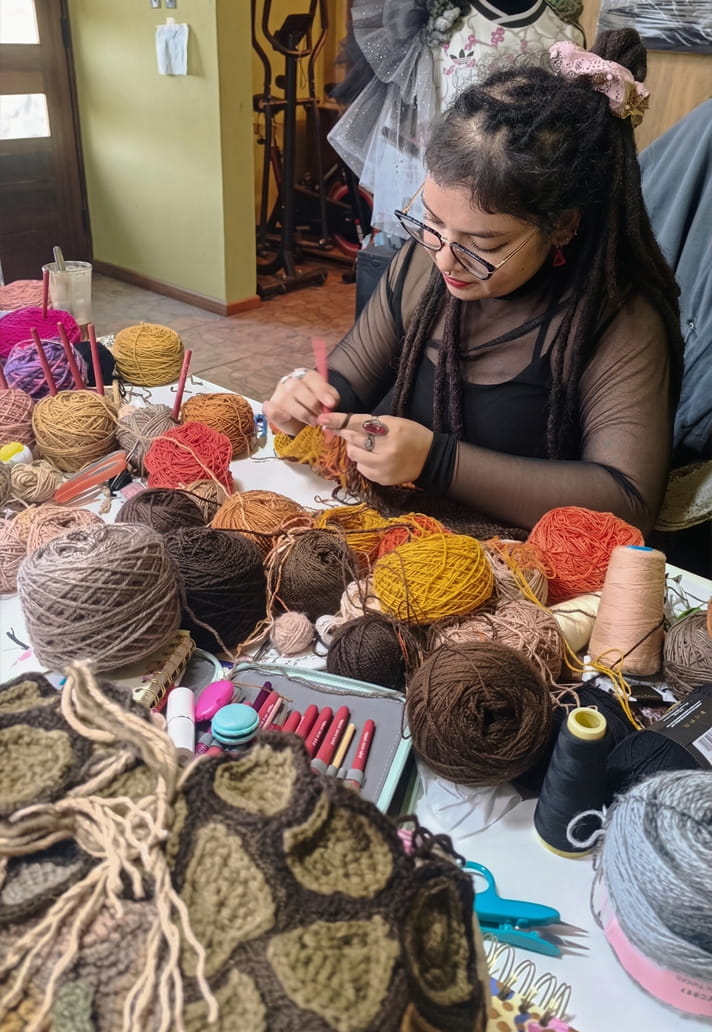
On the jersey, she chose to depict that inhospitable terrain. For Acevedo, resilience is forged in discomfort. It emerges in drought, not abundance. This idea is deeply personal. Her own career in physiotherapy was cut short by prejudice, a moment that forced her to endure quietly and rebuild her identity through art. “What stayed with me was the act of holding on,” she says. “Chaos layered upon chaos eventually gives way to life.”
Football, she believes, operates under the same logic. The spectacle of matchday hides years of invisible labour: pain, recovery, repetition. “Championships and finished artworks are simply the visible outcomes of much longer, quieter struggles,” Acevedo observes. This shared invisibility creates a powerful parallel between sport and textile art.
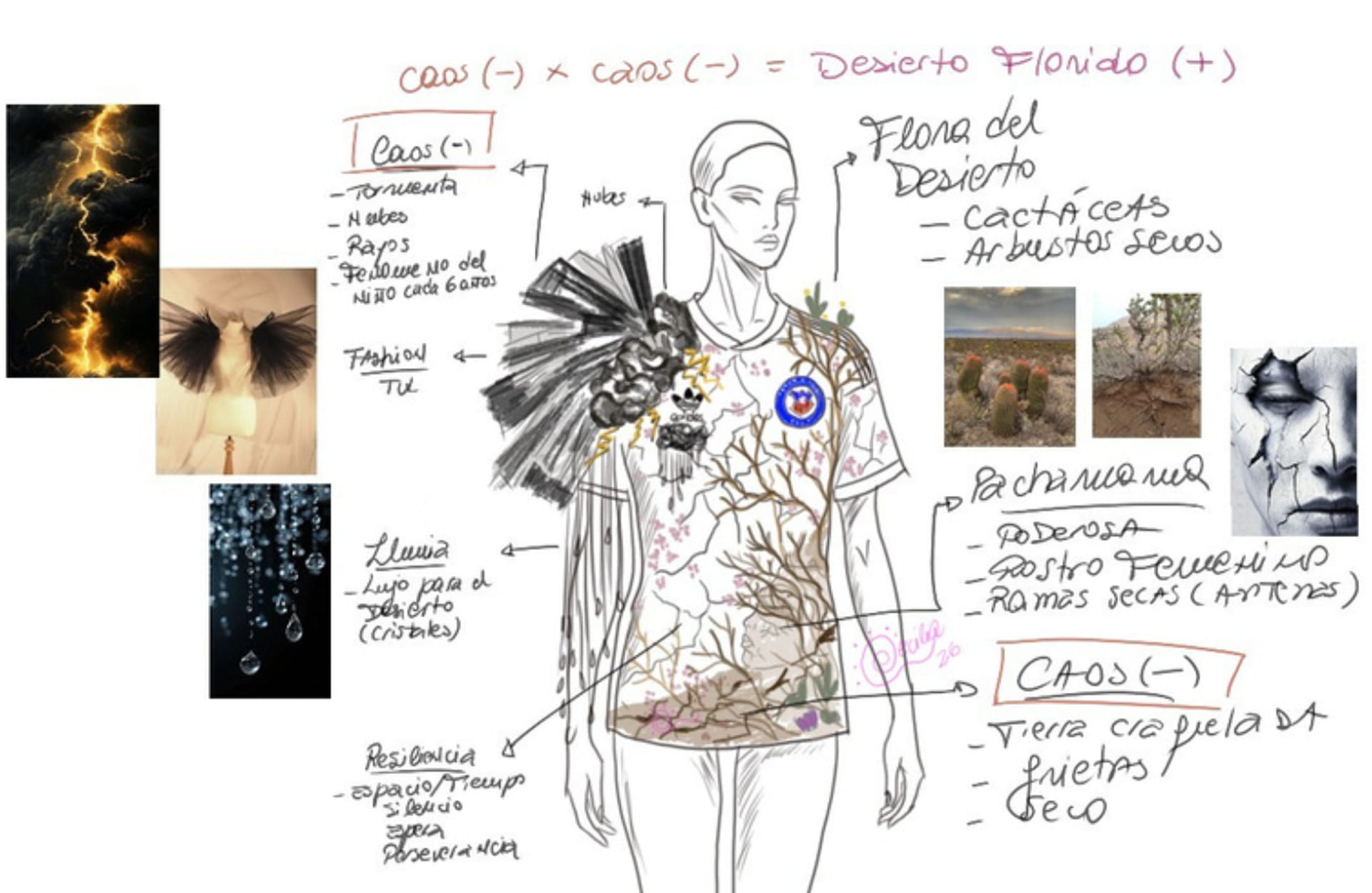
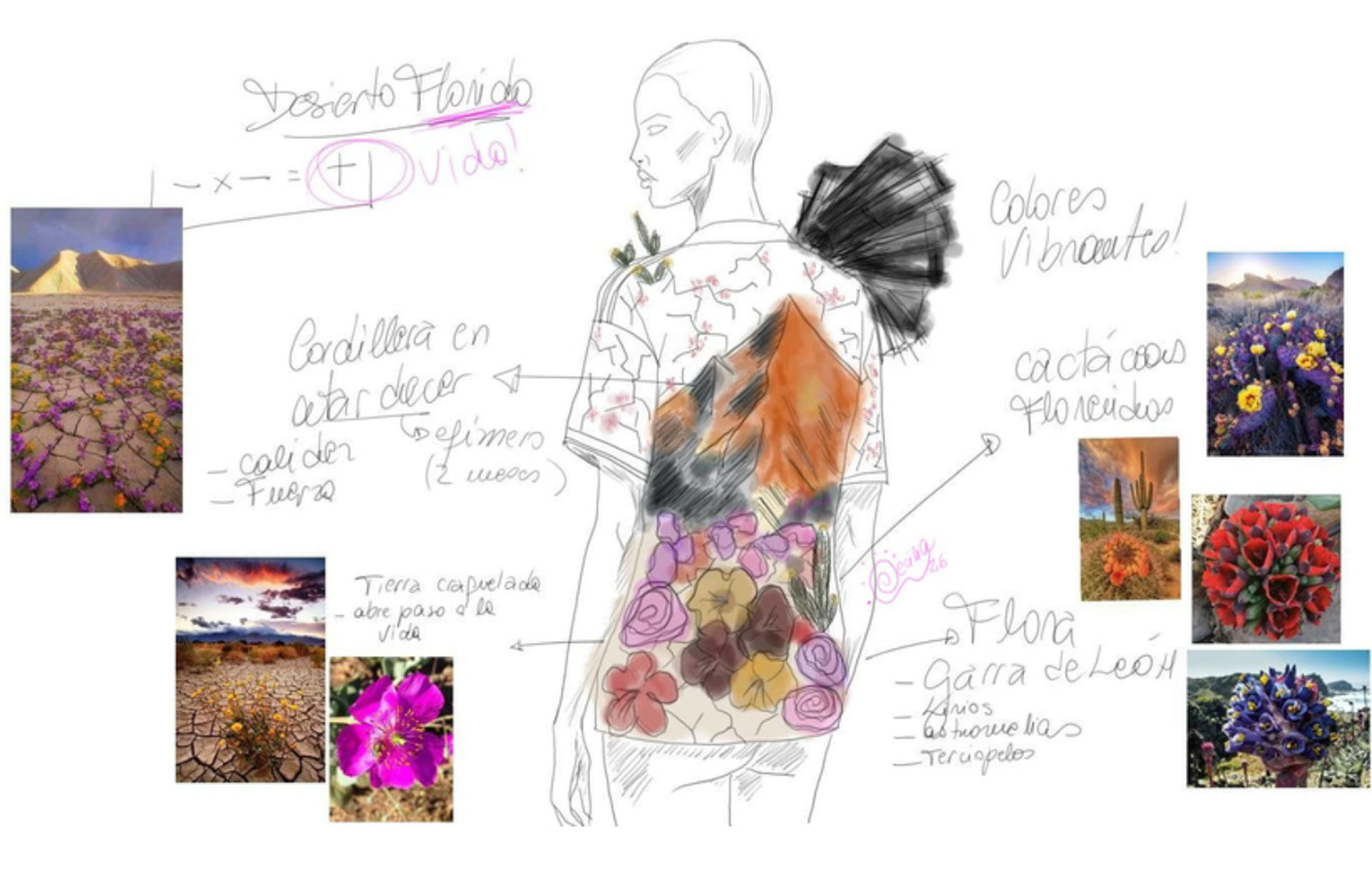
Her neurodivergence also plays a central role in her creative language. Rather than smoothing over disorder, she places it at the forefront – storms, dry branches, fractured surfaces. “My perspective allows me to see beauty in fragility,” she explains. “This project became a way of transforming difficulty into strength.”
Bringing crochet – a slow, deeply human craft – into the fast, global world of football highlighted something essential about Creative Soccer Culture. While the game appears immediate, excellence is built over time. Crochet and football may operate at different tempos, but both depend on patience. Both reward endurance.
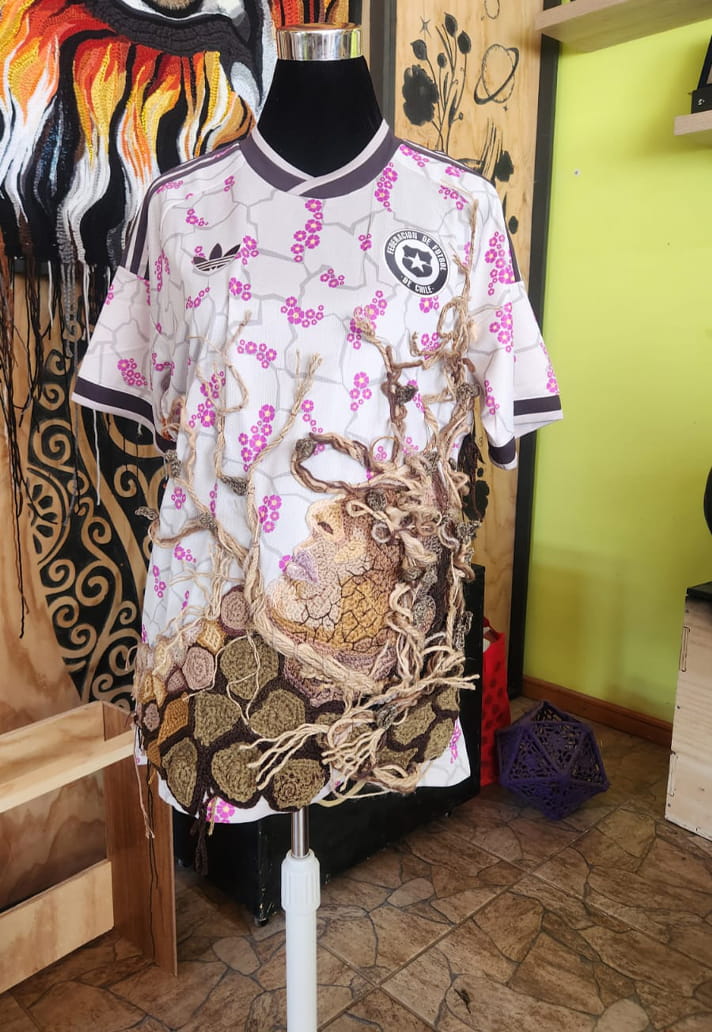
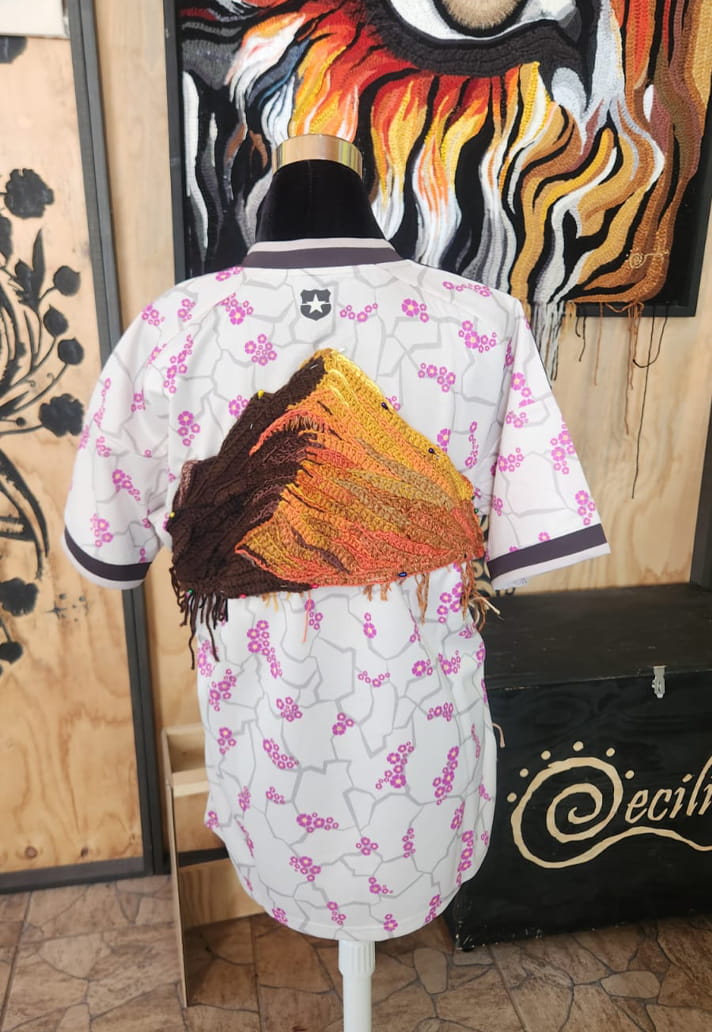
For Acevedo, the most profound shift was scale. Textile art is often framed as intimate or domestic. On a national team jersey, it becomes public, declarative, a statement of belonging. The project allowed her to return to the world of football on her own terms, not as someone excluded, but as an artist shaping the identity of the team itself.
Her jersey doesn’t celebrate victory alone. It honours the unseen work that makes survival – and success – possible.
Aurora Anita
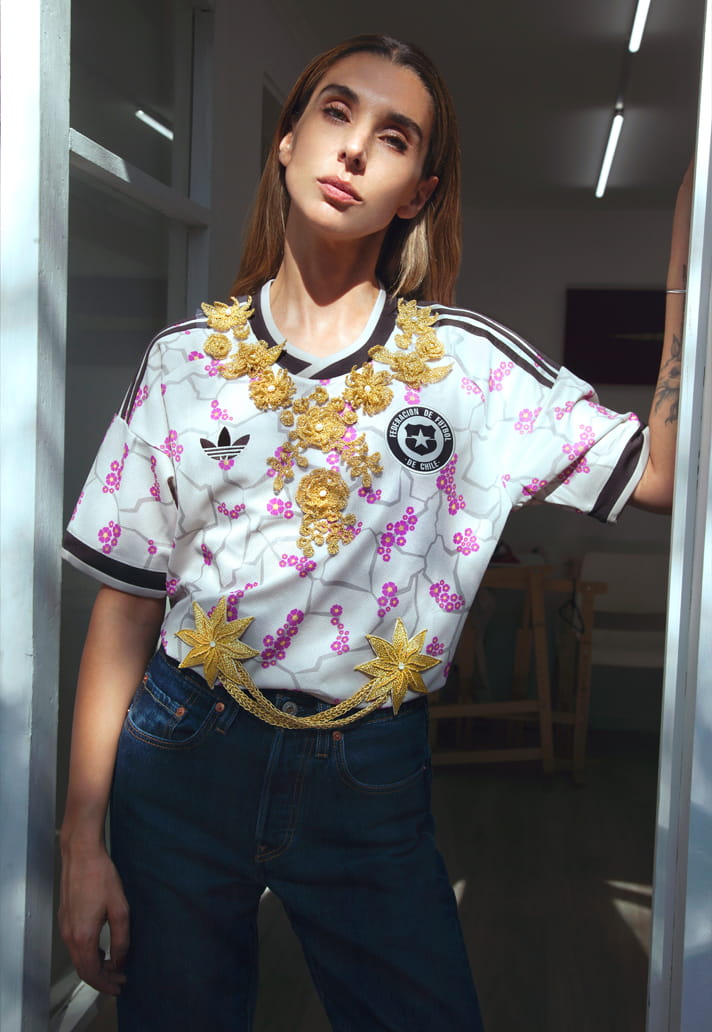
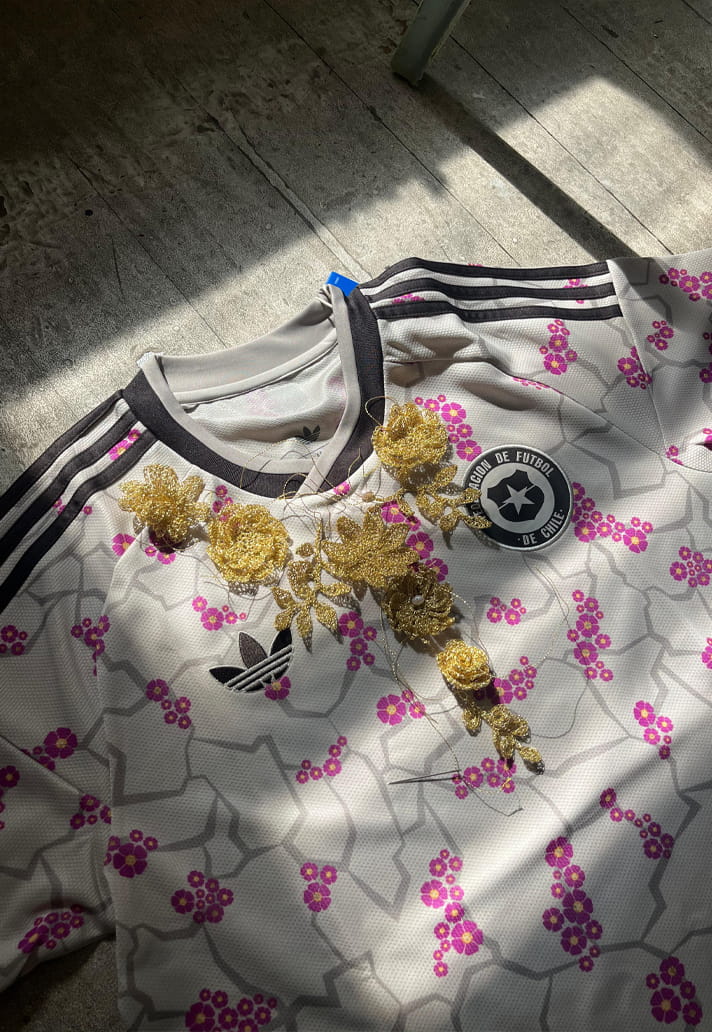
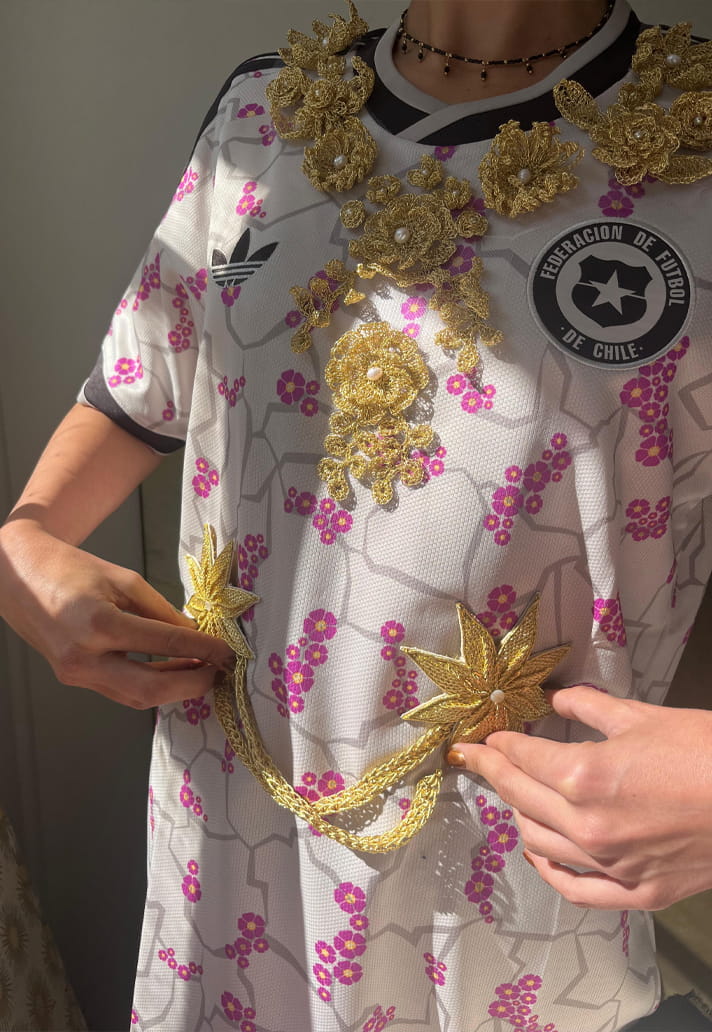
Aurora Anita’s contribution brings yet another layer to the conversation: reverence. Her practice centres on goldwork embroidery, a centuries-old technique perfected in Seville and traditionally used to adorn religious icons, ceremonial garments, and symbols of institutional importance. It is a craft steeped in ritual, patience, and devotion.
At first glance, goldwork and football might seem worlds apart. For Anita, the connection was immediate. “Sitting with needle and thread for hours requires discipline and presence,” she explains. “Those qualities closely mirror sport. Both demand consistency, resilience, and a willingness to move through doubt." The process, she notes, shapes something internal as much as external.
The Desierto Florido motif resonated deeply with her interest in time, memory, and regeneration. Renewal, she believes, is a quiet act. It requires stillness and repetition, qualities shared by both art and sport. “Through repetition, actions become refined and meaningful,” she says. “The desert reflects that cycle.”
Anita’s work often reinterprets the hidden histories of Latin American women – stories that exist in silence, outside official narratives. Placing that perspective onto a football shirt, a symbol so entwined with national pride and masculinity, was a deliberate intervention. “It creates a shared space where these stories can surface,” she explains, challenging traditional ideas of who football is for, and what it can represent.
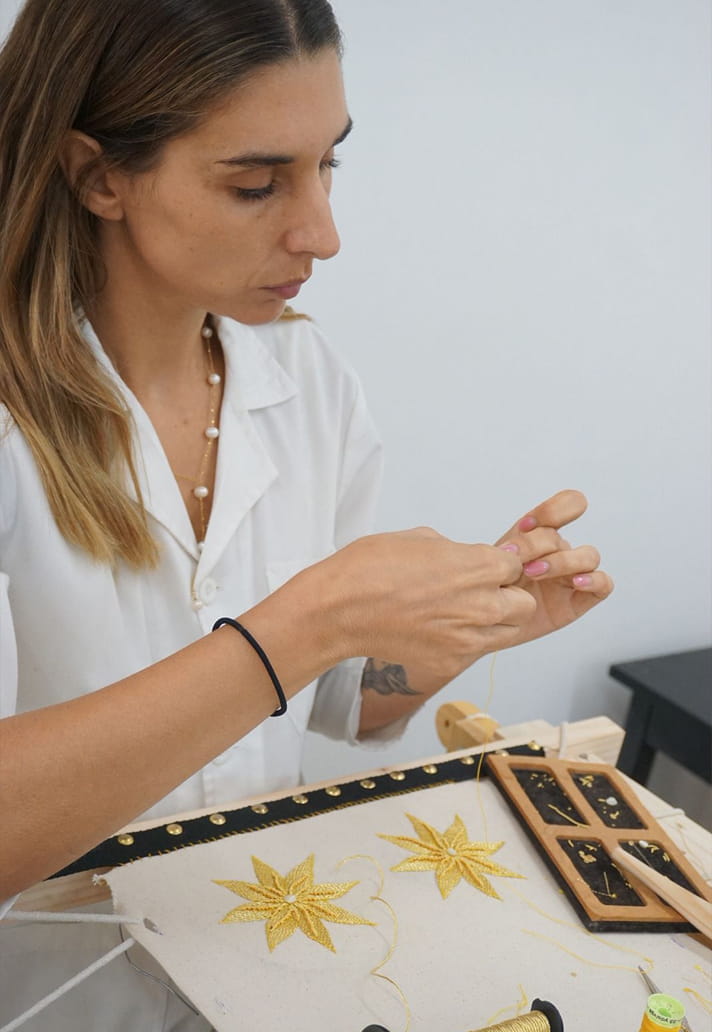
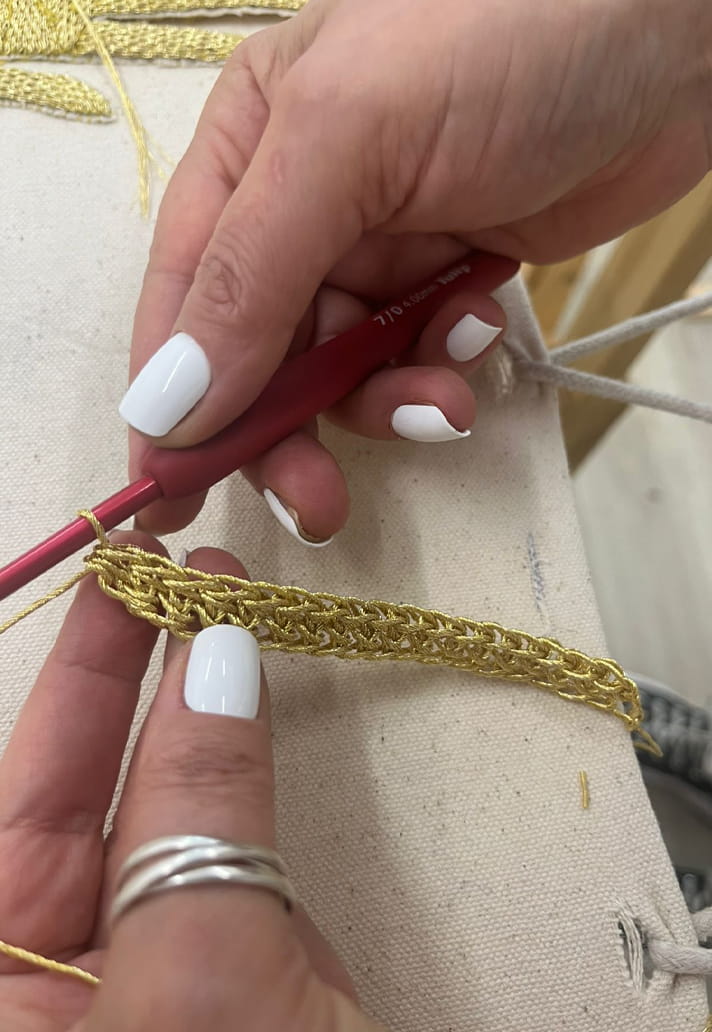
Goldwork’s association with honour and achievement made it particularly powerful in a sporting context. Football already uses gold and silver to mark success: medals, trophies, stars above crests. By introducing this artisanal technique, Anita contributes to football’s evolving visual culture while helping preserve a craft at risk of disappearing. “It’s about bringing something traditional into a contemporary context,” she says, “allowing it to live and adapt.”
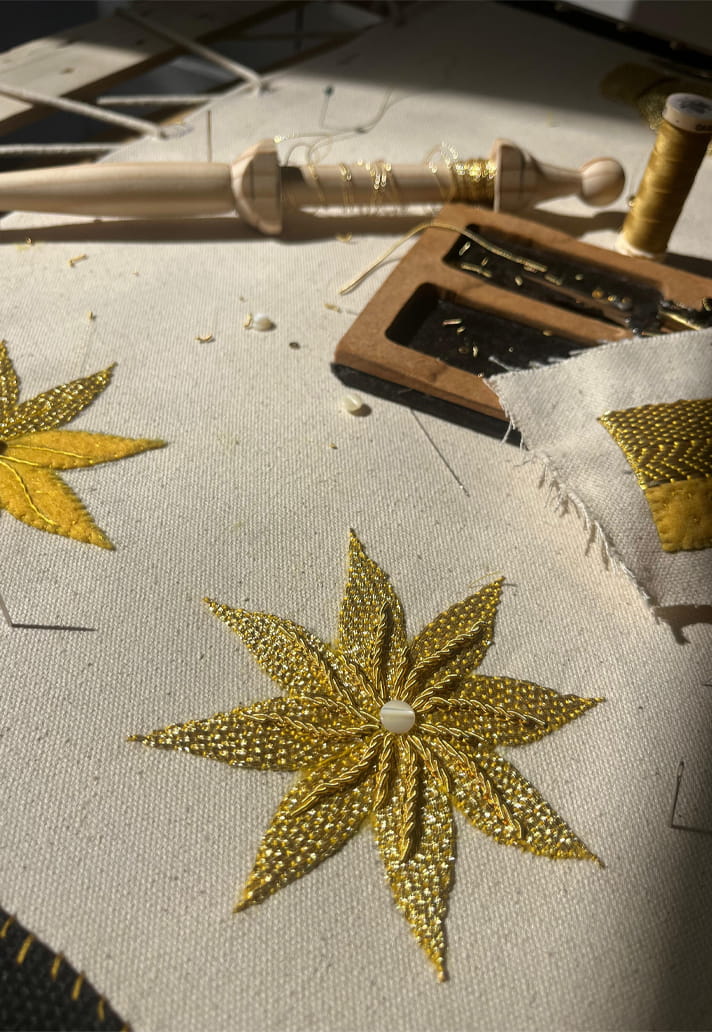
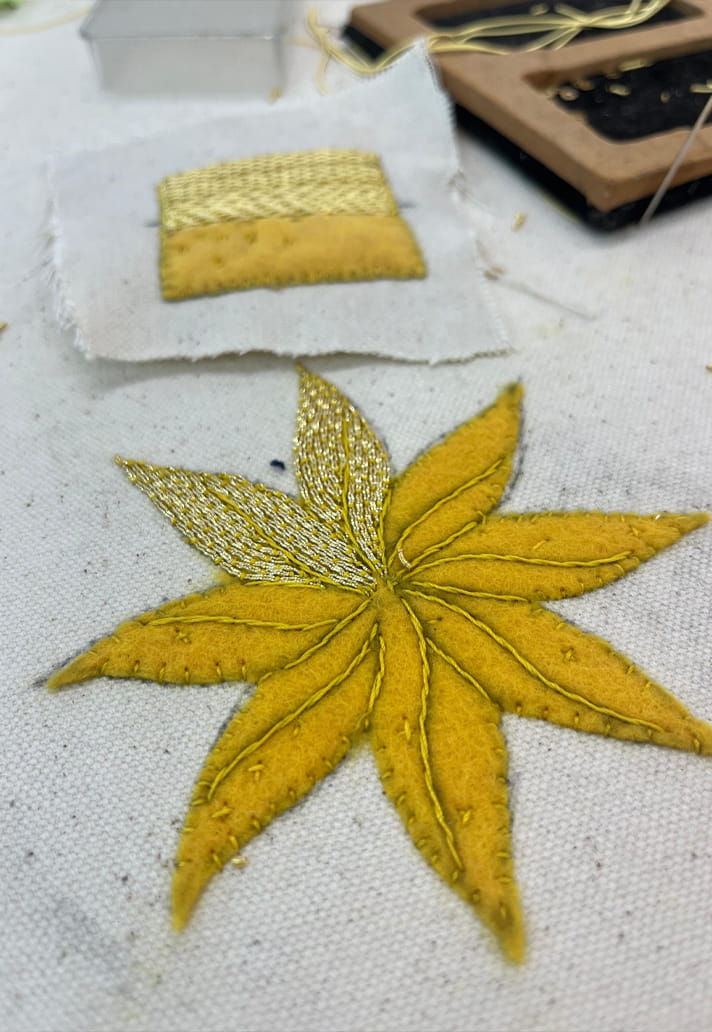
This symbolism was taken one step further through a special, bespoke jersey created for Chile and Olympique Lyonnais goalkeeper Tiane Endler, who is widely regarded as one of the greatest goalkeepers of her generation. Ahead of the 2027 Women’s World Cup, the gold-embellished shirt stands as both a pursuit of excellence and a reflection of Endler’s status: so often, she is pure gold for Chile.
Within a global football context, Anita found something almost spiritual; not religious, but communal. Football, she suggests, is a language of shared belief. In that space, art and sport don’t just intersect; they reinforce one another.
Taken together, the work of Guzmán, Acevedo, and Anita transforms the Chile away shirt into a canvas; a living archive of Chilean creativity, one that honours nature, endurance, memory, and craft. adidas’ “From Chile to the World” campaign succeeds not because it borrows cultural aesthetics, but because it hands the narrative over to the artists themselves.
Creative Soccer Culture thrives when the game opens itself up, when it allows space for reinterpretation, hybridity, and voices beyond the pitch. Like the Desierto Florido itself, this collaboration reminds us that beauty often emerges where we least expect it. From drought. From discipline. From the patient work of hands, waiting for the right moment to bloom.
Pick up the Chile 2026 away shirt at prodirectsport.com/soccer