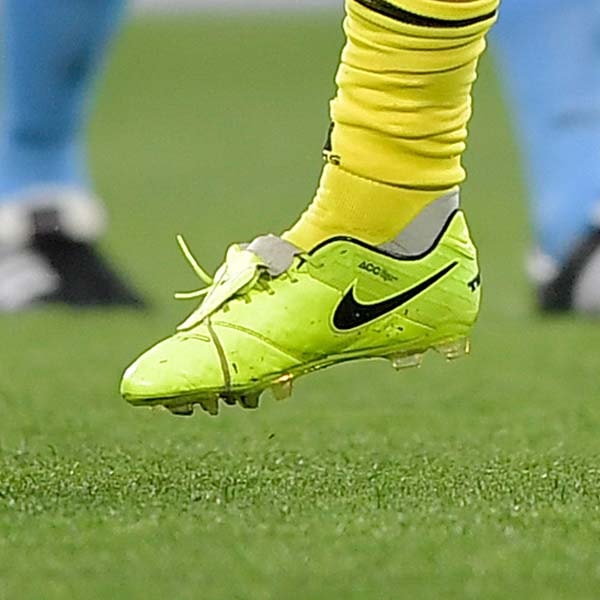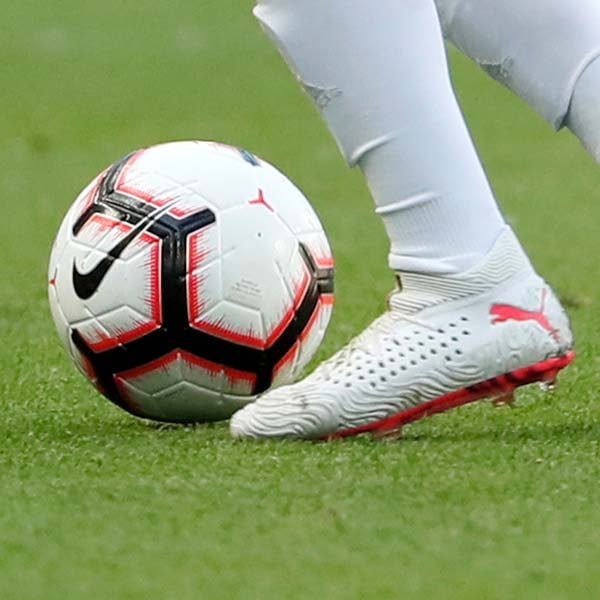
Football boots have never been more advanced. They’ve also never felt more the same.
Scroll through any current release cycle and you’ll find variations on a theme: synthetic uppers, stripped weight, aggressive soleplates, a language built around marginal gains. It works, performs, but it rarely sticks.
What’s been lost somewhere along the way isn’t function, but feeling, and rhat’s the gap Junior Clint, the Manchester-based designer, has stepped into. Not with a new technology, but with a different point of view.
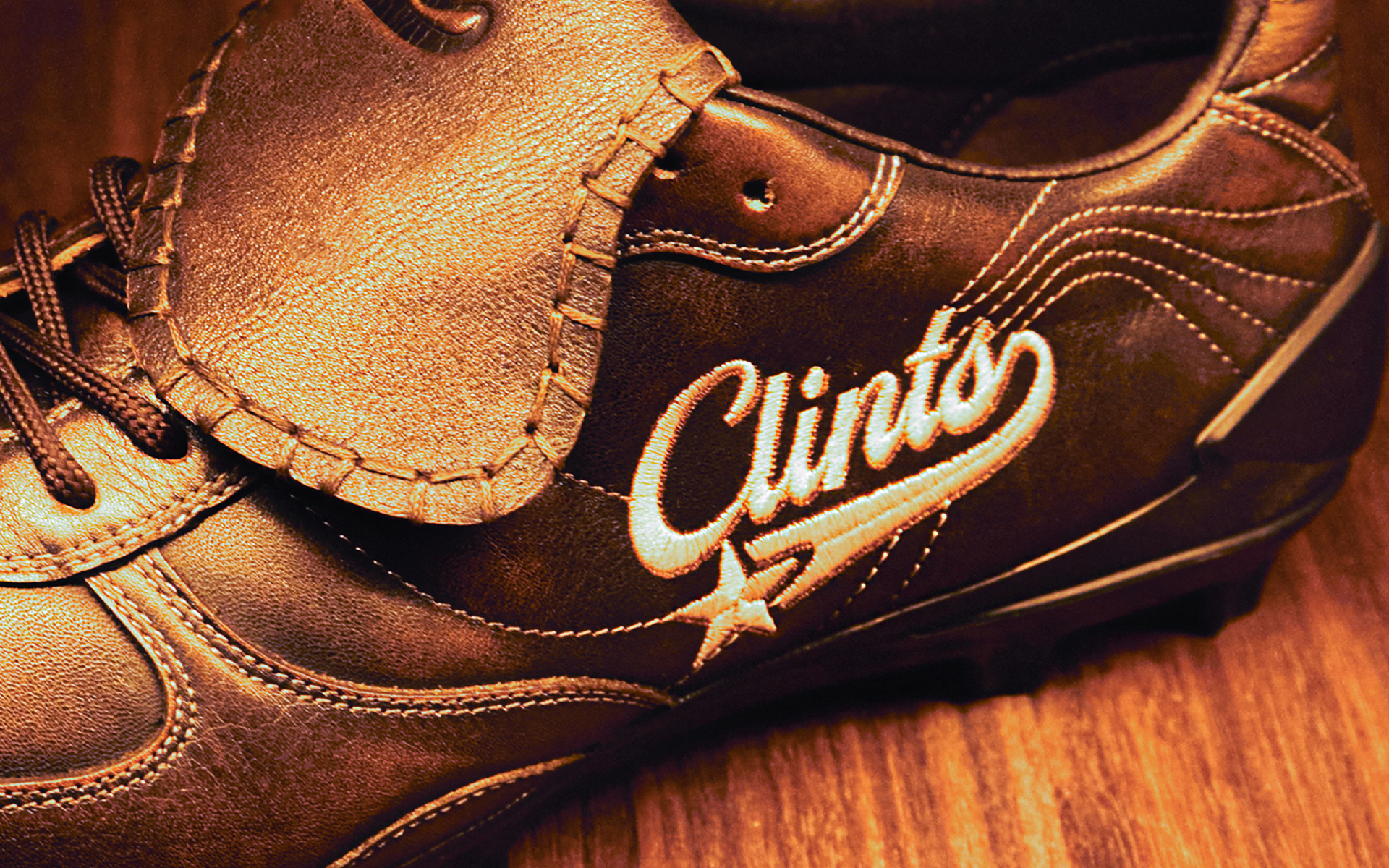
“The current football boot space is a modern spin off of the late ’90s to early 2000s silhouettes we all fell in love with,” he tells me. “I wouldn’t say anything is missing function-wise, but there’s definitely been a shift when it comes to the storytelling that made us fall in love with that era.”
It’s a telling place to start. Simply put, Clint isn’t trying to fix performance, he’s just questioning why boots have stopped really meaning something. The references are obvious, but not in the way you might expect. This isn’t a nostalgia play built on reissuing icons. If anything, it goes further back than that, before the era of signature silos and colourway cycles.
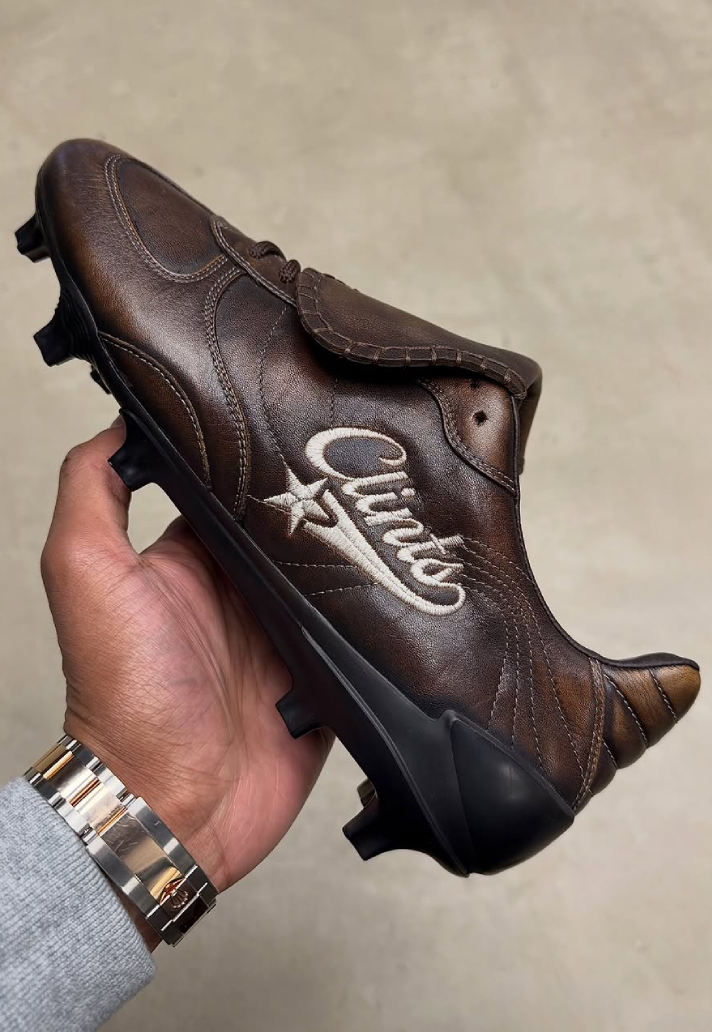
“We took a different route by going back to the origins. It was as simple as googling ‘first football boot created’ and staying as close to that blueprint as possible,” he says. It sounds almost reductive, but rest assured it isn’t. Because in a category obsessed with iteration, that kind of reset feels radical.
Leather-led, stripped-back, absent of unnecessary detailing. No attempt to compete on visual complexity and no desire to outpace the latest drop from the likes of Nike or adidas. Instead, a boot that looks like a boot.
“Football boots are built on the competitive nature of the game,” says Clint. “There’s a better probability to win. That’s non-negotiable. What we didn’t want was to add to an already crowded, modernised, design-led industry.”
What Clint is getting at is: this isn’t anti-modern for the sake of it, it’s merely selective. Performance stays while everything else gets questioned. In that sense, the boot sits closer to Clint’s wider work than it first appears.
His brand has always operated just outside the obvious lanes – grounded in Manchester, but not defined by it. Not nostalgic, not futuristic, just deliberately out of sync. “It’s a stretch to say the boot is influenced by Manchester,” he says, “but doing things different… that’s something that helps us keep pushing new perspectives. Subconsciously, that’s what the city’s about.”
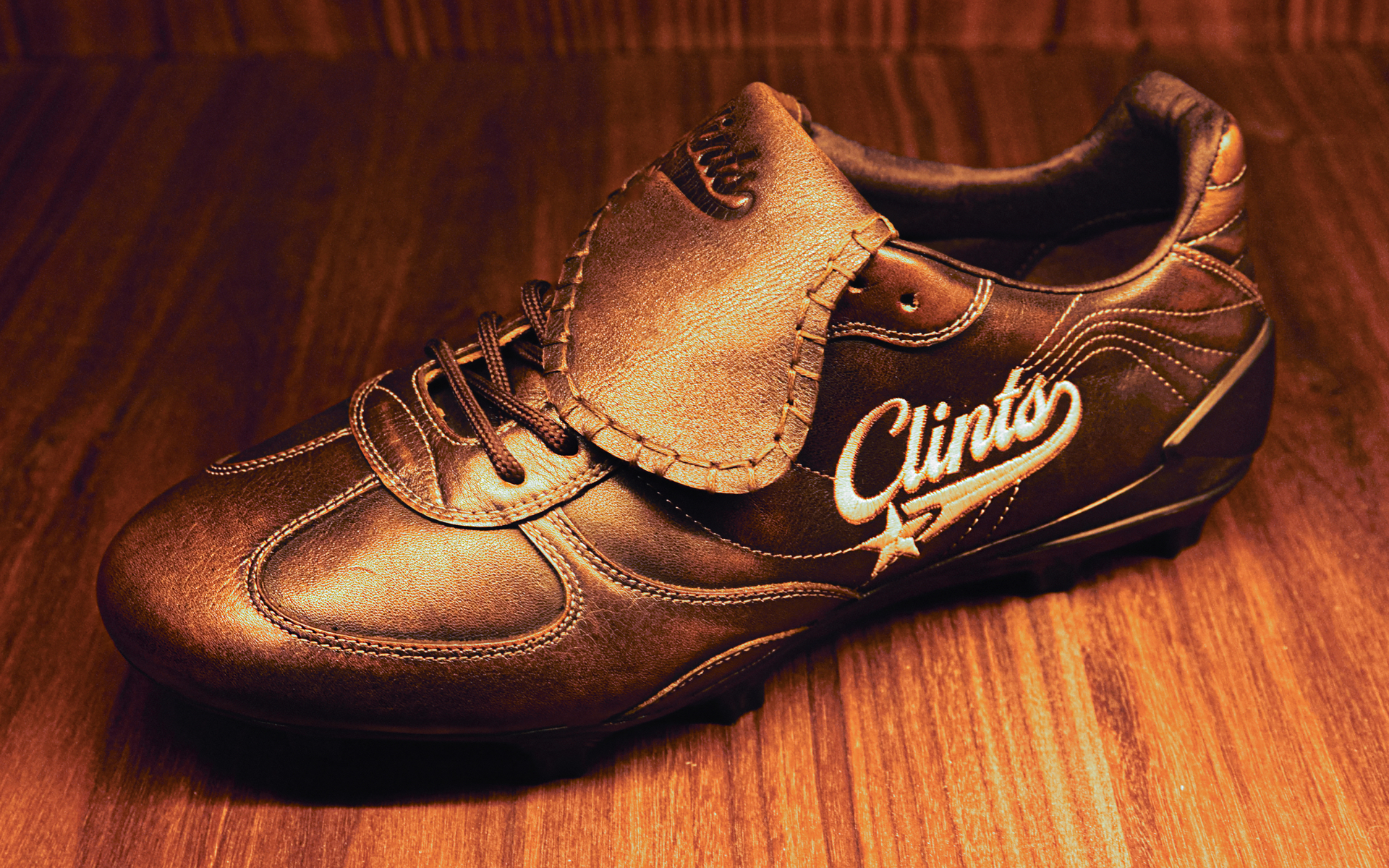
The boot doesn’t feel like it’s chasing relevance. In fact, if anything, it feels like it’s ignoring it. Which raises the obvious question: where does it go from here? Clint is measured. No big claims, no forced roadmap. “We go into all things design thinking long term,” he says. “But ultimately it’s the people’s choice if something sticks. That’s the beauty of the game.”
It’s a quiet answer, but it lands. Because that uncertainty is part of the point. In a market built on control – engineered launches, seeded hype, predictable cycles – releasing something this stripped-back is a risk. And that’s exactly why it works. Not because it looks different. Because it thinks differently.
You can keep up with everything Clints via the website